Exercise guide · Intermediate · Compound
Trap Bar Deadlift: How to Do It & Muscles Worked
The trap bar deadlift is a deadlift with a hexagonal bar that you stand inside, so the load sits in line with your body instead of in front of it. That makes it easier to learn and easier on the lower back while still training the legs and hips hard.
- Primary muscles
- Glutes
- Secondary muscles
- Hamstrings , Quads
- Equipment
- Trap Bar
- Level · type
- Intermediate · Compound
Written by the FitStack training team. Last reviewed .
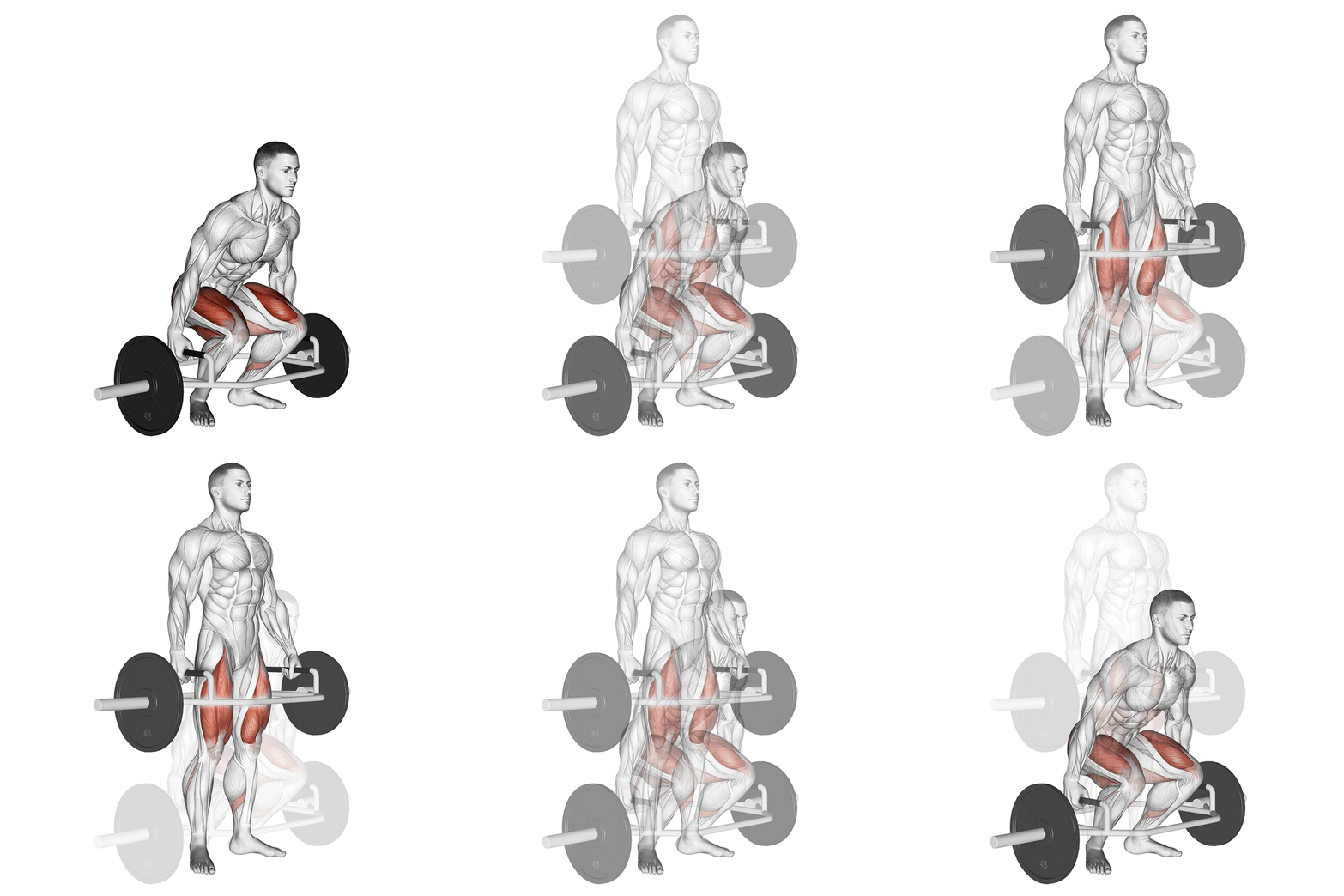
How to do the trap bar deadlift
- Step 1: Stand with your feet shoulder-width apart and the trap bar on the ground in front of you.
- Step 2: Bend at the hips and knees to lower yourself down and grip the handles of the trap bar with an overhand grip.
- Step 3: Keep your back straight and chest up as you begin to lift the trap bar off the ground by extending your hips and knees.
- Step 4: As you lift, focus on driving through your heels and squeezing your glutes at the top of the movement.
- Step 5: Lower the trap bar back down to the ground by bending at the hips and knees, keeping your back straight throughout the movement.
- Step 6: Repeat for the desired number of repetitions.
Form cues
- Stand in the centre of the bar so the handles line up with the middle of your feet.
- Push your hips back, bend your knees and grip the handles in the middle.
- Chest up, arms long, lats tight.
- Drive the floor away and stand up tall, then lower the bar the same way.
Common trap bar deadlift mistakes
-
Standing off-centre so the bar tilts.
Fix: Check that the handles sit at your ankle bones before every set.
-
Turning it into a squat with the hips too low.
Fix: Set your hips just above knee height so the hips and knees straighten together.
-
Letting the shoulders round forward.
Fix: Think "proud chest" and pull your shoulder blades down before you lift.
Sets, reps and programming
A good main lower-body lift for beginners and athletes: 3 to 5 sets of 3 to 8 reps. The high-handle setting shortens the range of motion and is useful if you are tall or still learning.
| Goal | Sets | Reps | Rest | Effort |
|---|---|---|---|---|
| Strength | 3–5 | 3–6 | 3–5 min | 1–3 reps in reserve |
| Muscle growth | 3–4 | 6–12 | 2–3 min | 1–2 reps in reserve |
| Muscular endurance | 2–3 | 12–20 | 1–2 min | 1–3 reps in reserve |
Ranges follow the ACSM position stand on progression in resistance training. Muscle grows across a wide range of loads when sets end close to failure (Schoenfeld et al., 2017), longer rests between heavy sets support strength and size (Schoenfeld et al., 2016), and stopping a rep or two short of failure works about as well as training to failure (Grgic et al., 2022). Estimate your working weights with the strength calculators.
Variations and progressions
- Conventional deadlift — Harder: the bar travels in front of the body.
- Romanian deadlift — More hamstring focus.
Trap Bar Deadlift alternatives
- Goblet squat — Knee-dominant leg work with a single dumbbell.
- Farmer's walk — Same grip and upright posture, done over distance.
More exercises that train the glutes as their main target:
-
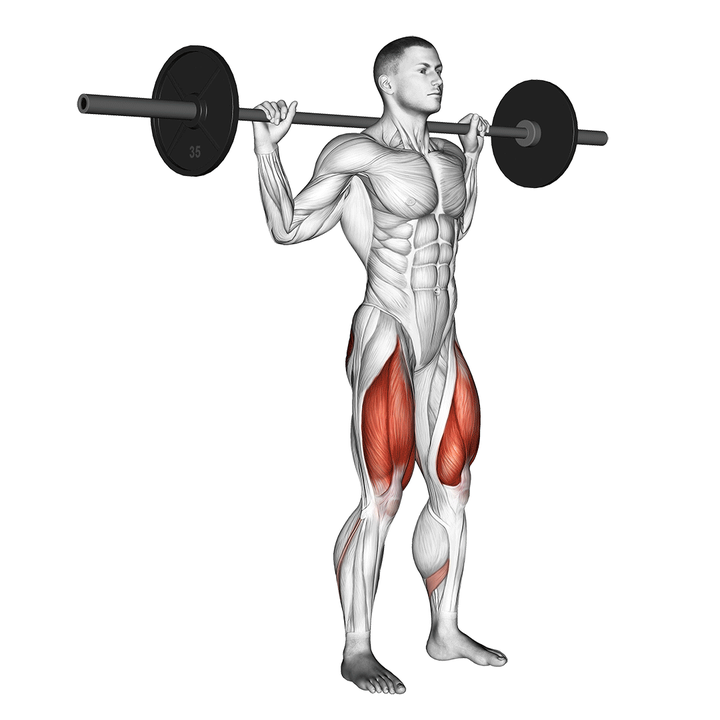
Angled Barbell Narrow Stance Squat
Glutes · Barbell · Intermediate compound -
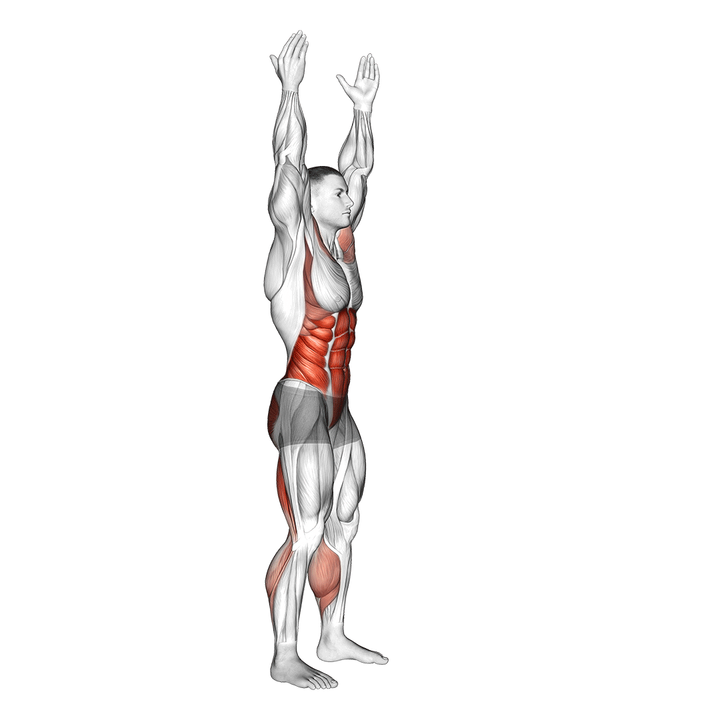
Arms Apart Circular Toe Touch (Male)
Glutes · Body Weight · Intermediate balance -
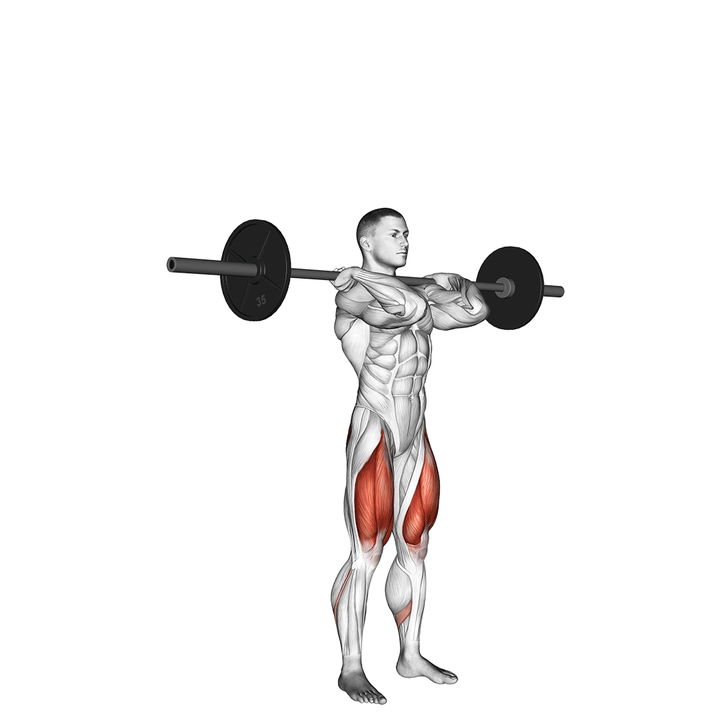
Barbell Clean-Grip Front Squat
Glutes · Barbell · Intermediate compound -
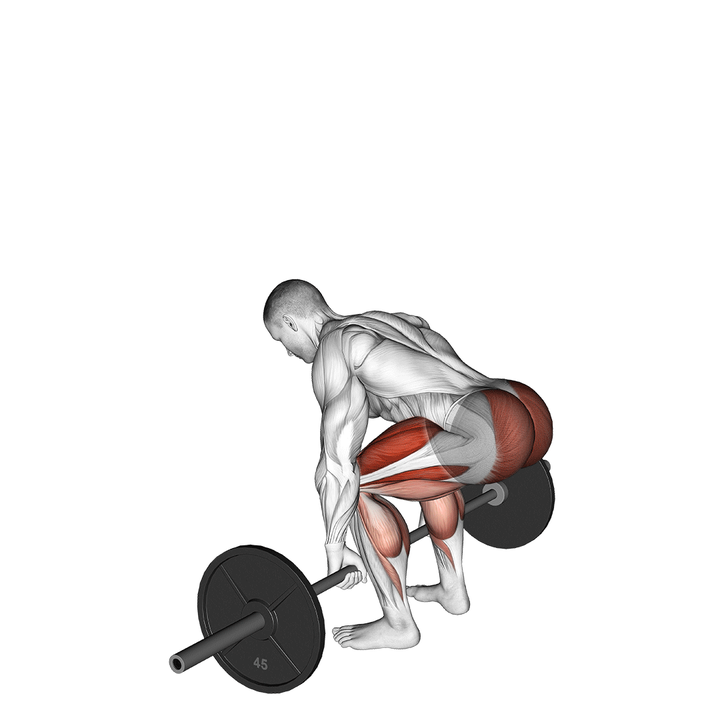
Barbell Deadlift
Glutes · Barbell · Intermediate compound -
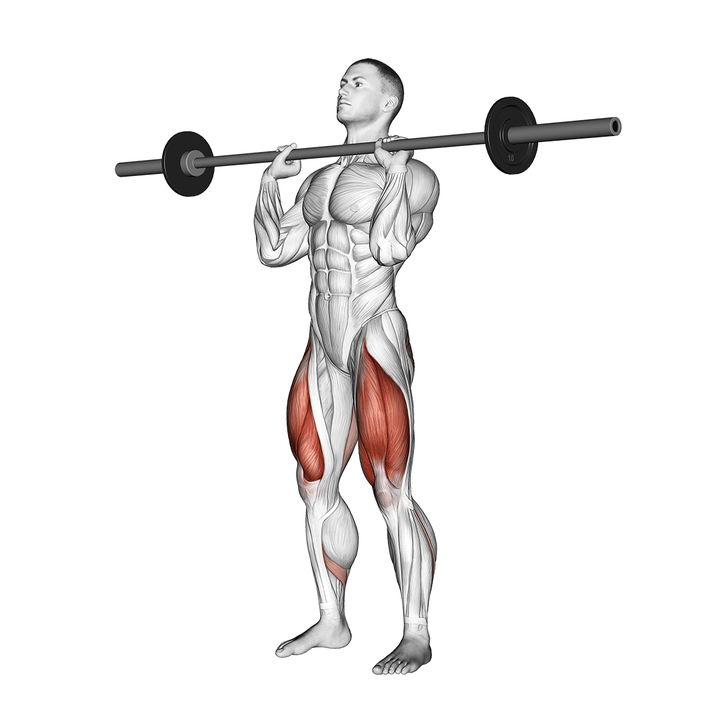
Barbell Front Chest Squat
Glutes · Barbell · Intermediate compound -
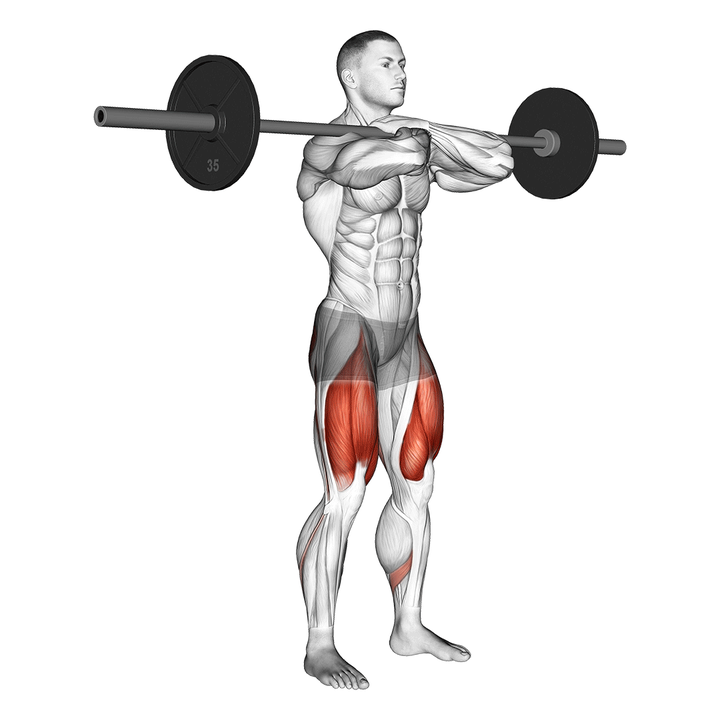
Barbell Front Squat
Glutes · Barbell · Intermediate compound -
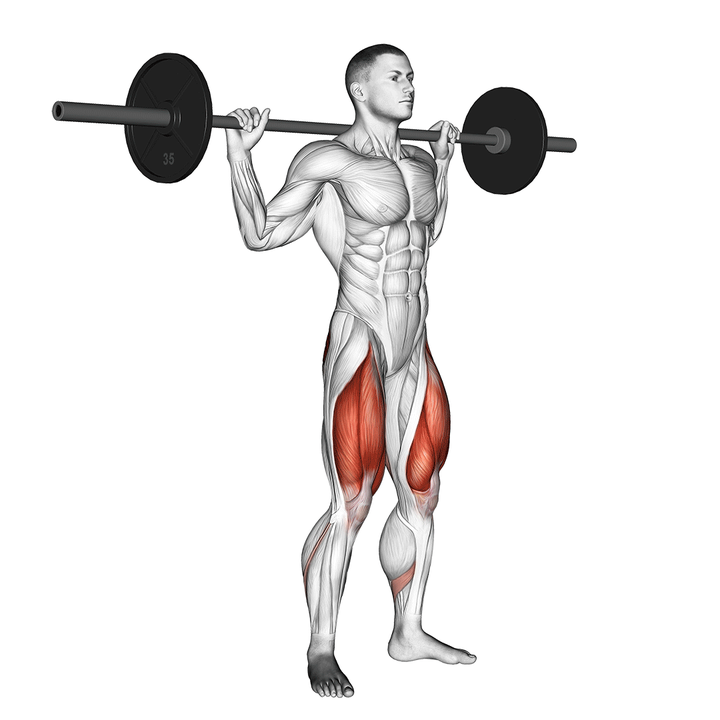
Barbell Back Squat
Glutes · Barbell · Intermediate compound -
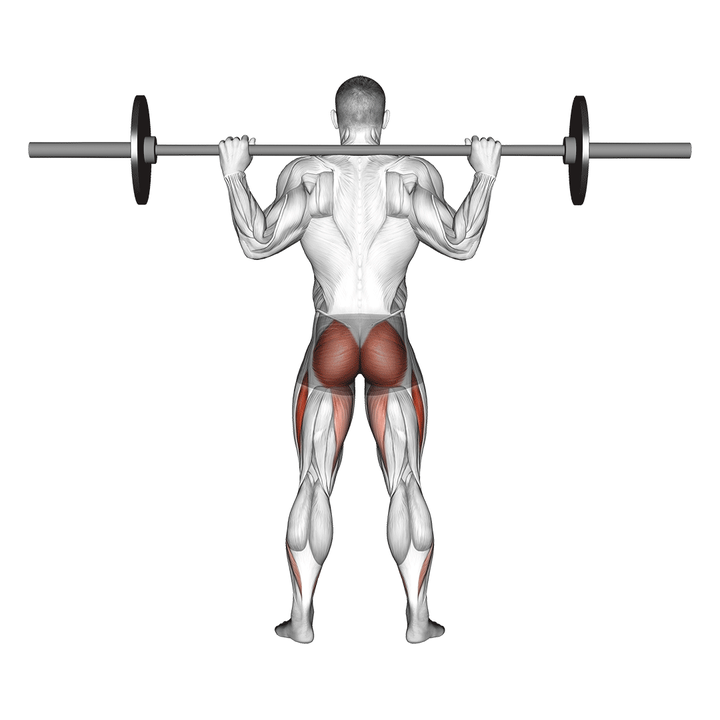
Barbell Full Squat (Back Pov)
Glutes · Barbell · Intermediate compound
Trap Bar Deadlift FAQs
Is the trap bar deadlift easier than the regular deadlift?
Most people can lift a little more with a trap bar and find it easier to learn, because the load stays in line with the body. It uses more quads and less lower back than the conventional deadlift.
Does the trap bar deadlift count as a deadlift?
Yes. It is a hip-and-knee extension from the floor, the same as a conventional deadlift, just with the load in a different place.
More glutes exercises
-
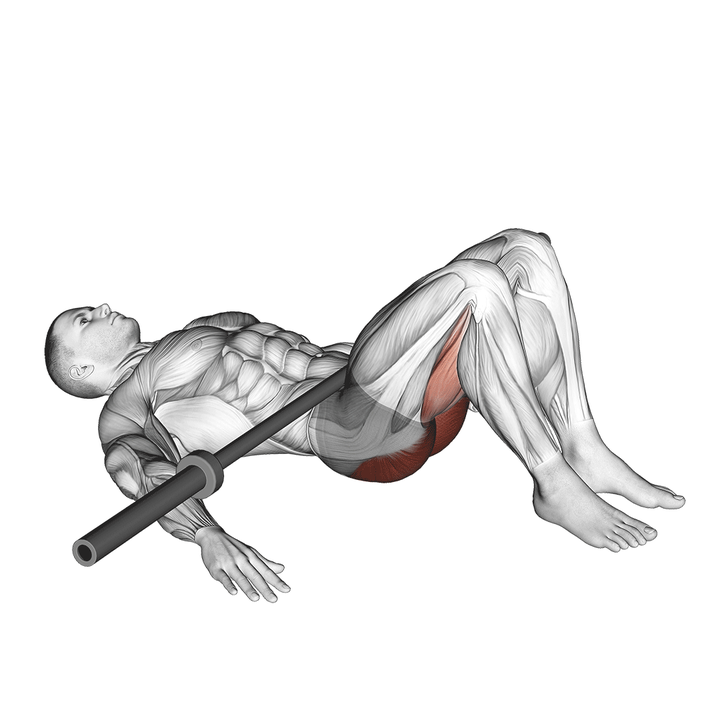
Barbell Glute Bridge
Glutes · Barbell · Intermediate compound -
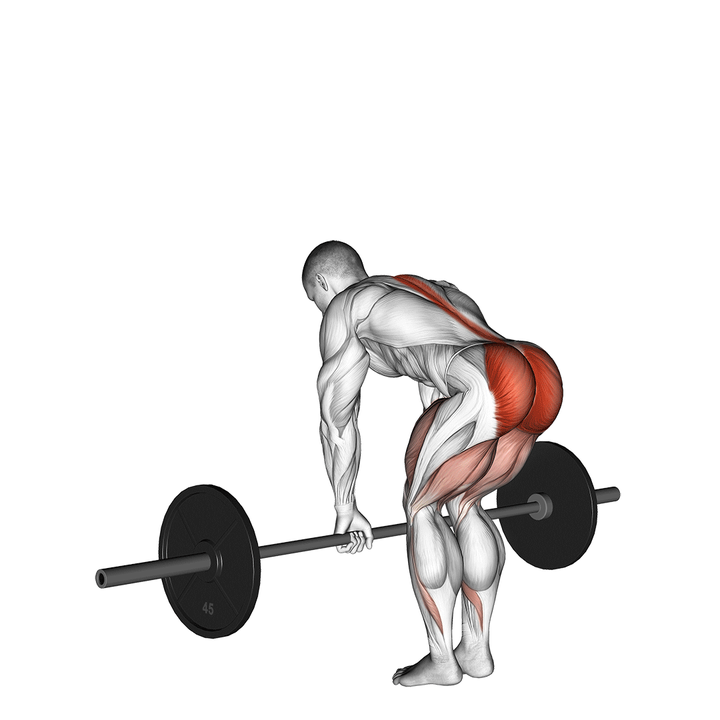
Barbell Romanian Deadlift
Glutes · Barbell · Intermediate compound -
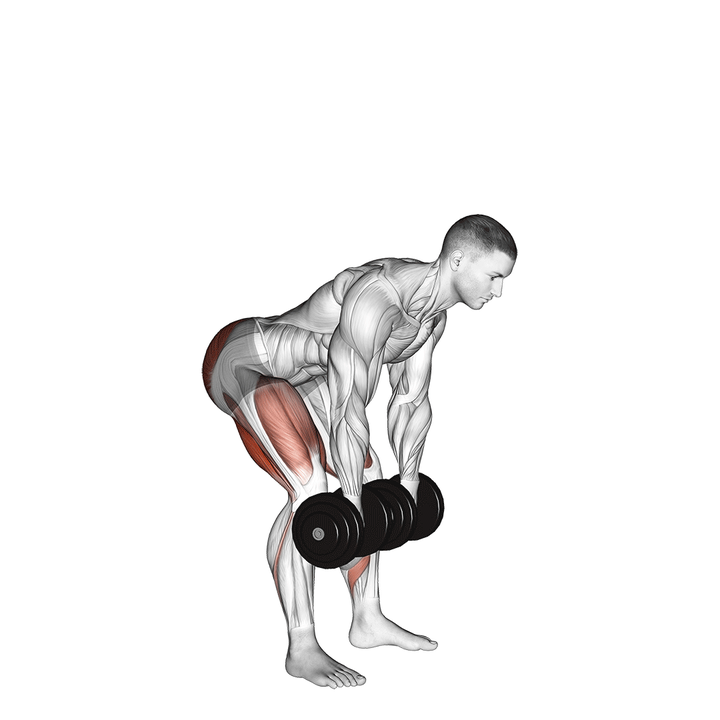
Dumbbell Romanian Deadlift
Glutes · Dumbbell · Intermediate compound -
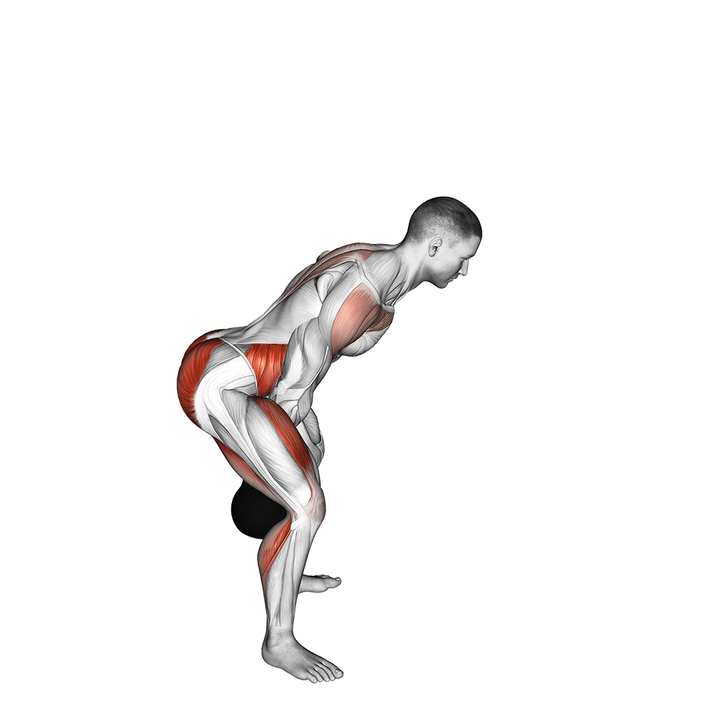
Kettlebell Swing
Glutes · Kettlebell · Intermediate compound -
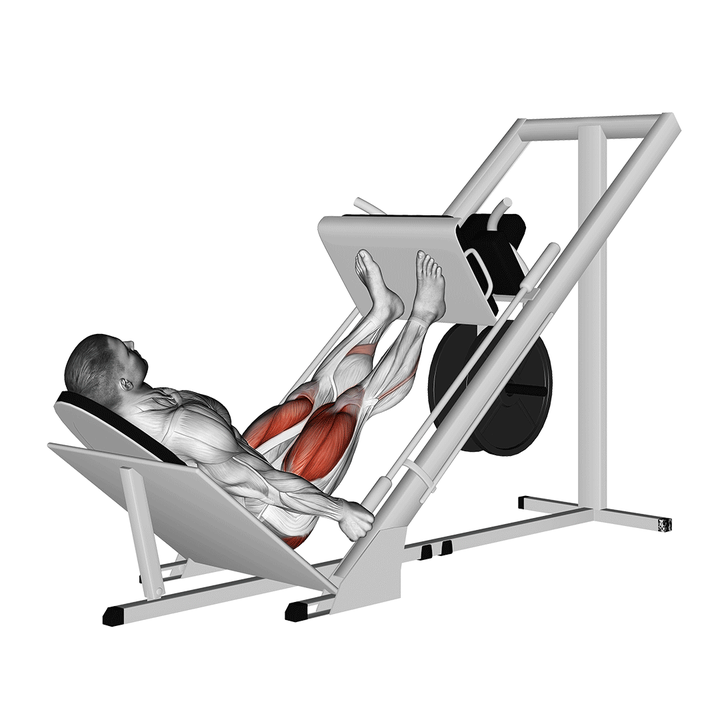
45-Degree Leg Press
Glutes · Sled Machine · Beginner compound -
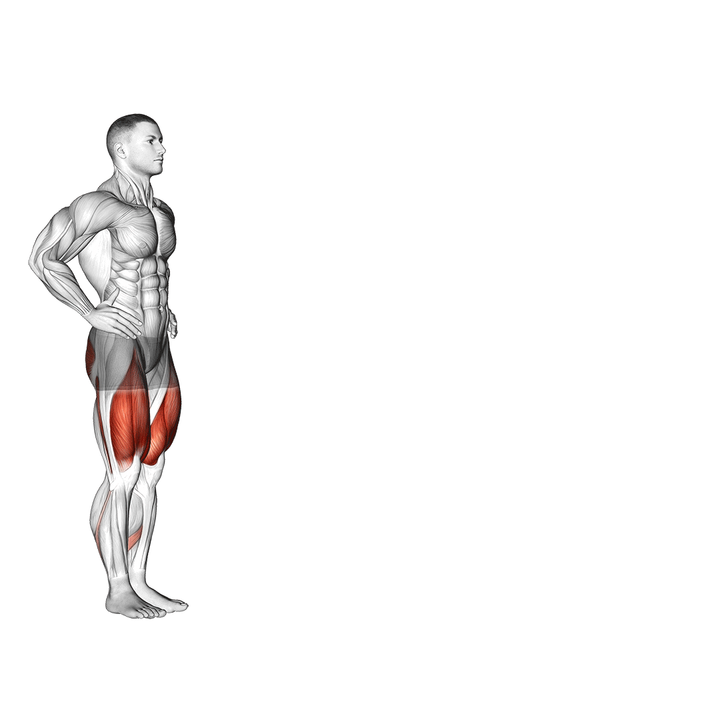
Walking Lunge
Glutes · Body Weight · Intermediate compound
Sources
- American College of Sports Medicine. Progression models in resistance training for healthy adults. Med Sci Sports Exerc. 2009;41(3):687-708.
- Schoenfeld BJ, Grgic J, Ogborn D, Krieger JW. Strength and hypertrophy adaptations between low- vs. high-load resistance training. J Strength Cond Res. 2017;31(12):3508-3523.
- Schoenfeld BJ, Pope ZK, Benik FM, et al. Longer interset rest periods enhance muscle strength and hypertrophy in resistance-trained men. J Strength Cond Res. 2016;30(7):1805-1812.
- Grgic J, Schoenfeld BJ, Orazem J, Sabol F. Effects of resistance training performed to repetition failure or non-failure on muscular strength and hypertrophy: a systematic review and meta-analysis. J Sport Health Sci. 2022;11(2):202-211.
Step-by-step instructions and demonstration media are from the ExerciseDB exercise dataset; cues, mistakes, programming and FAQs are written by FitStack.
This guide is general fitness information, not medical advice. Stop if an exercise causes pain and speak to a doctor or physiotherapist about injuries or health conditions before starting a new programme.