Exercise guide · Intermediate · Compound
Kettlebell Swing: How to Do It & Muscles Worked
The kettlebell swing is an explosive hip hinge: you hike the bell between your legs and snap your hips forward to float it to chest height. It trains the glutes and hamstrings for power and doubles as conditioning.
- Primary muscles
- Glutes
- Secondary muscles
- Abs , Obliques , Hamstrings
- Equipment
- Kettlebell
- Level · type
- Intermediate · Compound
Written by the FitStack training team. Last reviewed .
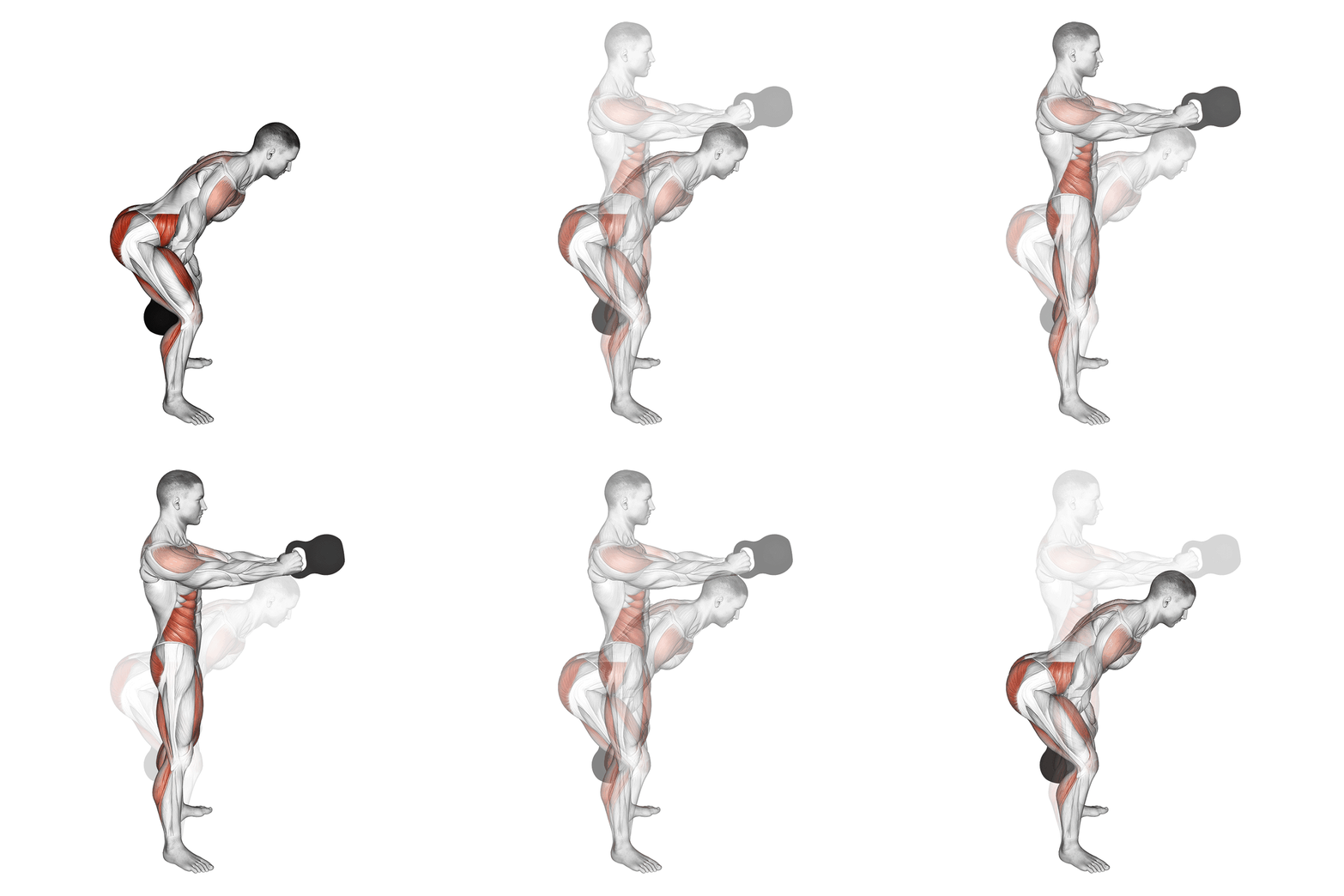
How to do the kettlebell swing
- Step 1: Stand with your feet shoulder-width apart, toes pointed slightly outward.
- Step 2: Hold the kettlebell with both hands in front of your body, arms extended.
- Step 3: Bend your knees slightly and hinge at the hips, pushing your butt back.
- Step 4: Swing the kettlebell back between your legs, keeping your arms straight and maintaining a flat back.
- Step 5: Drive your hips forward and swing the kettlebell up to shoulder height, using the momentum generated by your hips.
- Step 6: Allow the kettlebell to swing back down between your legs and repeat the movement for the desired number of repetitions.
Form cues
- Start with the bell a foot in front of you; hinge and grip it with both hands.
- Hike it back between your thighs like a football snap.
- Snap your hips forward and squeeze your glutes; your arms only guide the bell.
- Let the bell fall and hinge as your forearms meet your thighs.
Common kettlebell swing mistakes
-
Squatting the bell instead of hinging.
Fix: Keep the shins nearly vertical and push the hips back, not down.
-
Lifting the bell with the arms and shoulders.
Fix: The hips drive the bell; your arms stay relaxed and straight.
-
Leaning back at the top.
Fix: Finish standing tall like a plank, with glutes and abs tight.
Sets, reps and programming
Use swings for power at the start of a session (5 to 10 sets of 5 to 10 reps) or as conditioning at the end (intervals such as 20 seconds on, 40 seconds off). Common starting weights are 8 to 12 kg for women and 16 kg for men; move up once you can do 10 crisp reps per set.
| Goal | Sets | Reps | Rest | Effort |
|---|---|---|---|---|
| Strength | 3–5 | 3–6 | 3–5 min | 1–3 reps in reserve |
| Muscle growth | 3–4 | 6–12 | 2–3 min | 1–2 reps in reserve |
| Muscular endurance | 2–3 | 12–20 | 1–2 min | 1–3 reps in reserve |
Ranges follow the ACSM position stand on progression in resistance training. Muscle grows across a wide range of loads when sets end close to failure (Schoenfeld et al., 2017), longer rests between heavy sets support strength and size (Schoenfeld et al., 2016), and stopping a rep or two short of failure works about as well as training to failure (Grgic et al., 2022). Estimate your working weights with the strength calculators.
Kettlebell Swing alternatives
- Dumbbell RDL — Slower hinge for strength.
- Glute bridge — Glute work without the speed.
More exercises that train the glutes as their main target:
-
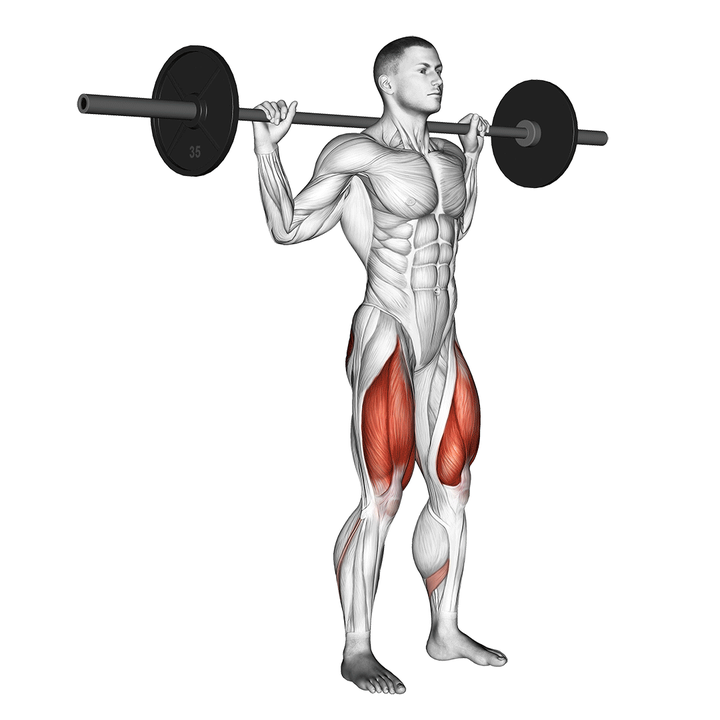
Angled Barbell Narrow Stance Squat
Glutes · Barbell · Intermediate compound -
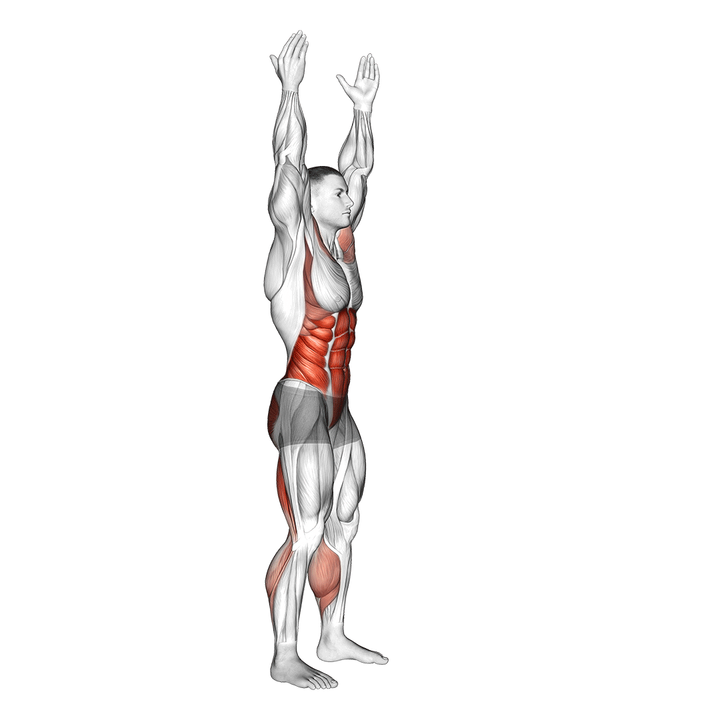
Arms Apart Circular Toe Touch (Male)
Glutes · Body Weight · Intermediate balance -
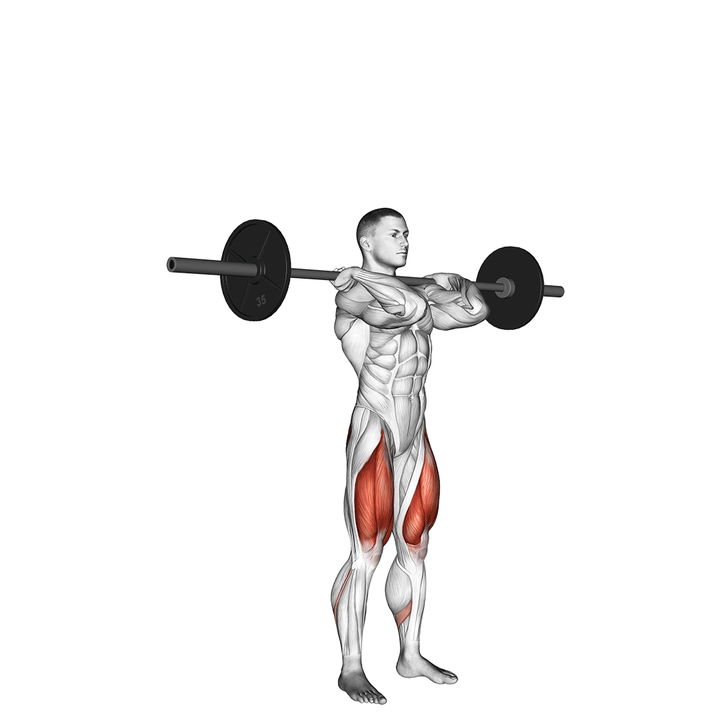
Barbell Clean-Grip Front Squat
Glutes · Barbell · Intermediate compound -
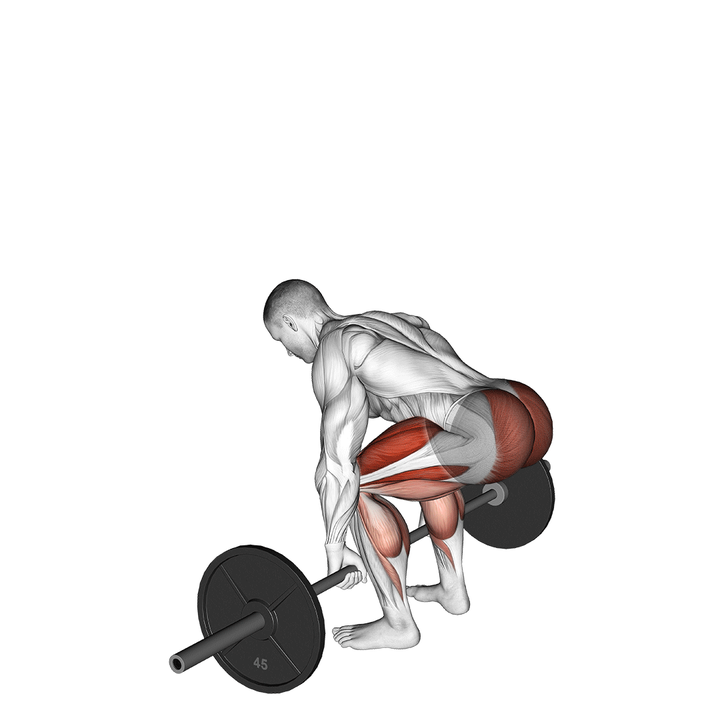
Barbell Deadlift
Glutes · Barbell · Intermediate compound -
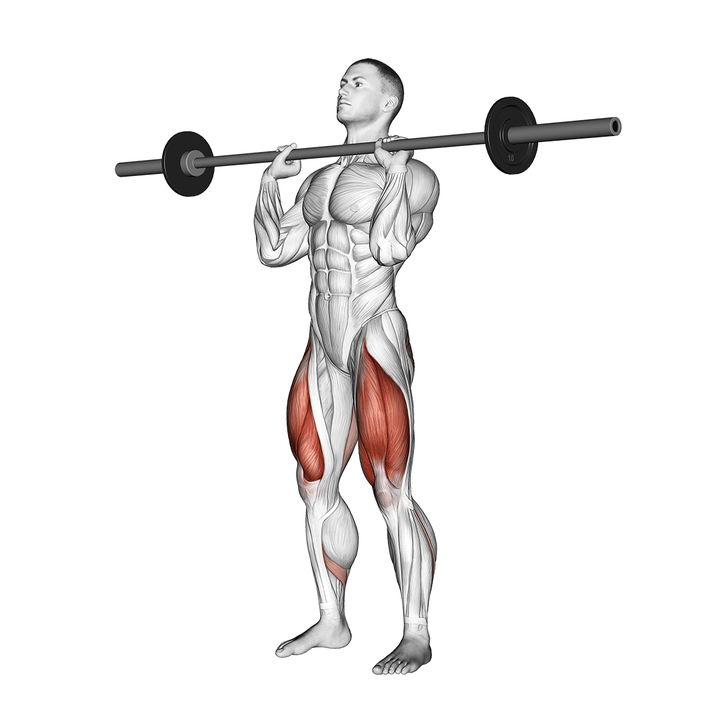
Barbell Front Chest Squat
Glutes · Barbell · Intermediate compound -
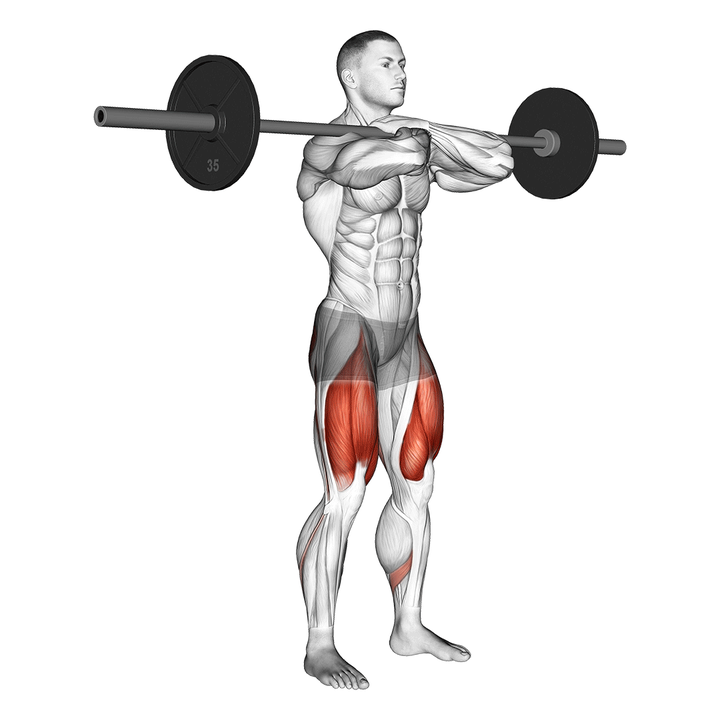
Barbell Front Squat
Glutes · Barbell · Intermediate compound -
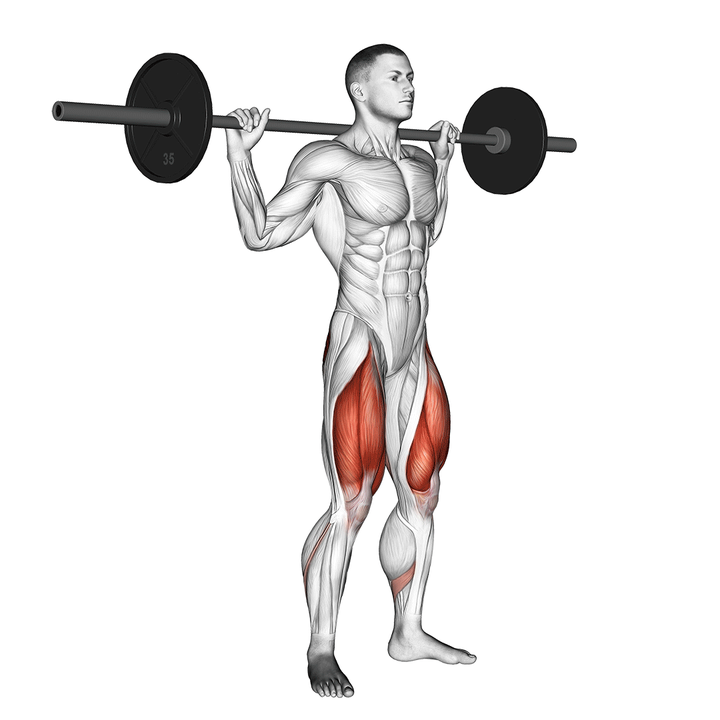
Barbell Back Squat
Glutes · Barbell · Intermediate compound -
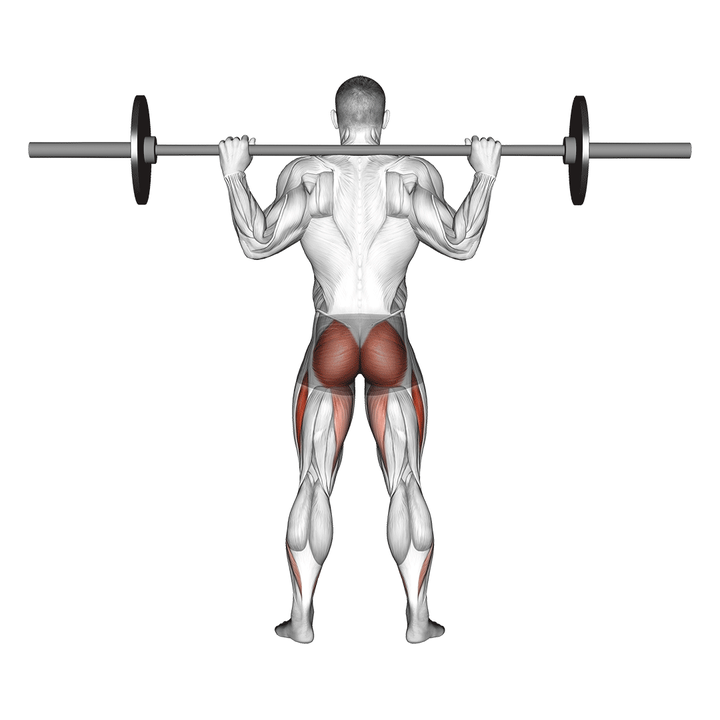
Barbell Full Squat (Back Pov)
Glutes · Barbell · Intermediate compound
Kettlebell Swing FAQs
Are kettlebell swings cardio or strength?
Both. Light-to-moderate swings for many reps raise your heart rate like conditioning, while heavier swings for low reps train hip power.
Should kettlebell swings go overhead?
Swinging to chest or eye height (the Russian swing) is enough for most people. Overhead (American) swings add little and demand more shoulder mobility.
More glutes exercises
-
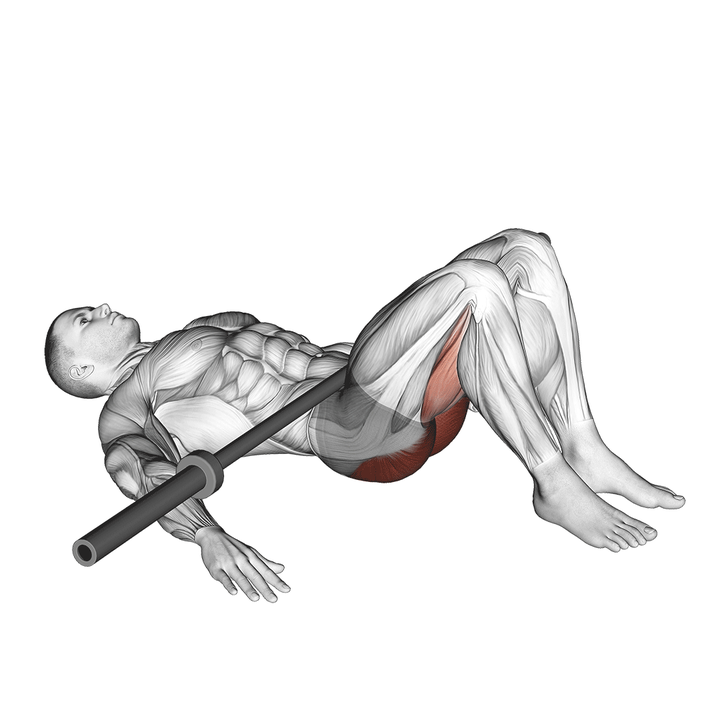
Barbell Glute Bridge
Glutes · Barbell · Intermediate compound -
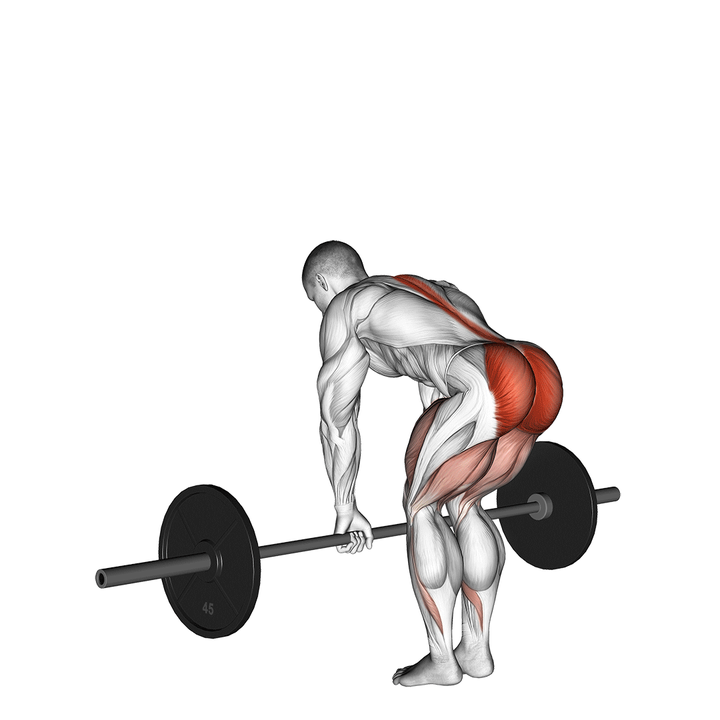
Barbell Romanian Deadlift
Glutes · Barbell · Intermediate compound -
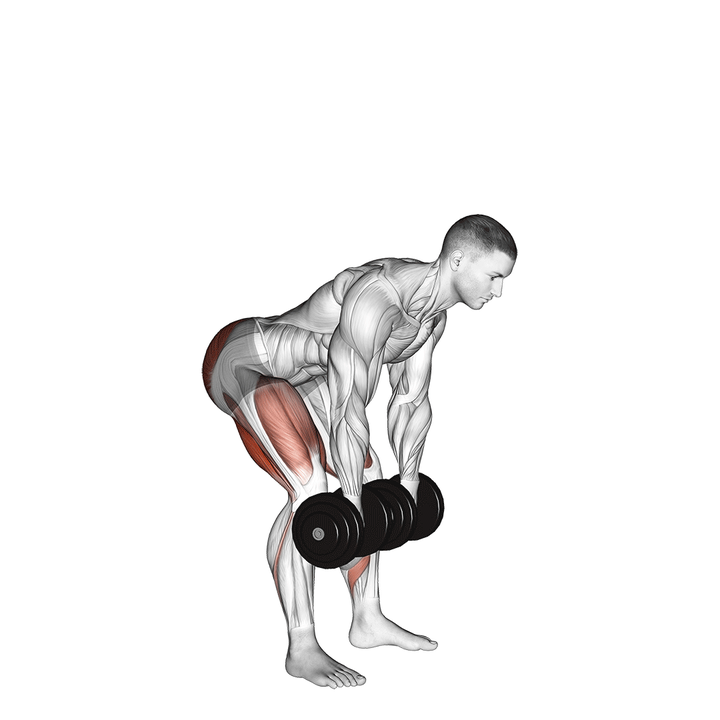
Dumbbell Romanian Deadlift
Glutes · Dumbbell · Intermediate compound -
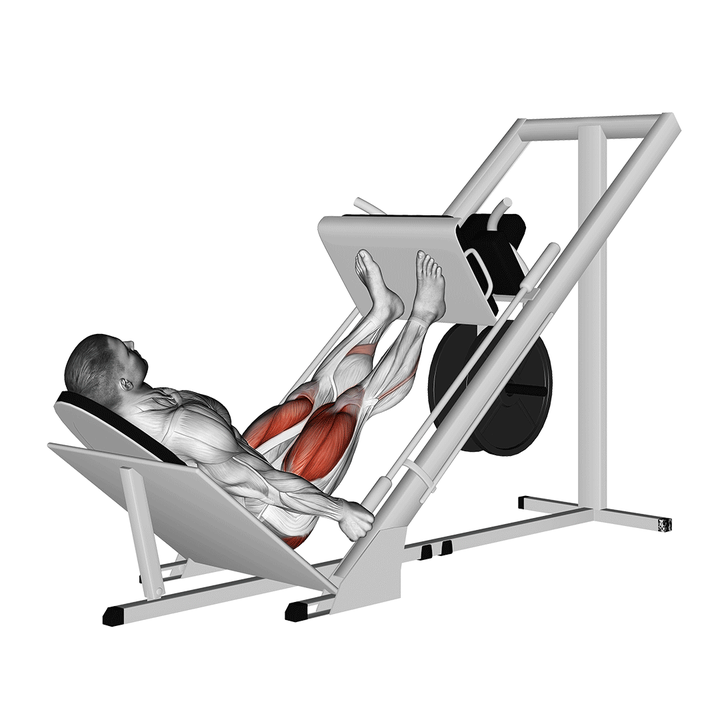
45-Degree Leg Press
Glutes · Sled Machine · Beginner compound -
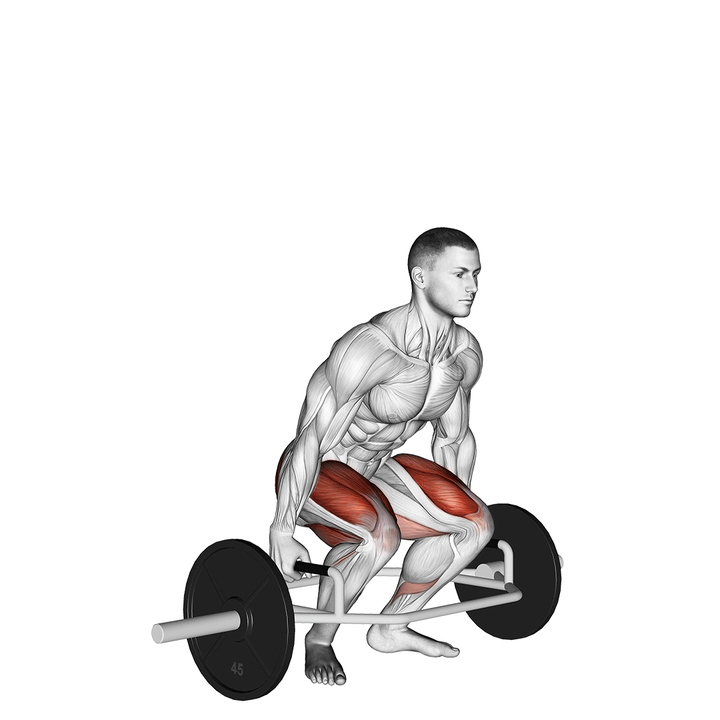
Trap Bar Deadlift
Glutes · Trap Bar · Intermediate compound -
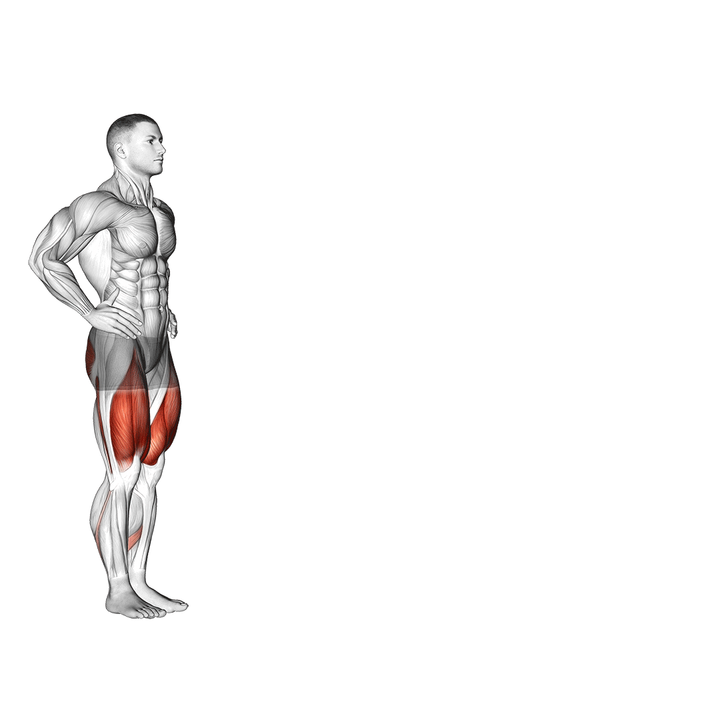
Walking Lunge
Glutes · Body Weight · Intermediate compound
Sources
- American College of Sports Medicine. Progression models in resistance training for healthy adults. Med Sci Sports Exerc. 2009;41(3):687-708.
- Schoenfeld BJ, Grgic J, Ogborn D, Krieger JW. Strength and hypertrophy adaptations between low- vs. high-load resistance training. J Strength Cond Res. 2017;31(12):3508-3523.
- Schoenfeld BJ, Pope ZK, Benik FM, et al. Longer interset rest periods enhance muscle strength and hypertrophy in resistance-trained men. J Strength Cond Res. 2016;30(7):1805-1812.
- Grgic J, Schoenfeld BJ, Orazem J, Sabol F. Effects of resistance training performed to repetition failure or non-failure on muscular strength and hypertrophy: a systematic review and meta-analysis. J Sport Health Sci. 2022;11(2):202-211.
Step-by-step instructions and demonstration media are from the ExerciseDB exercise dataset; cues, mistakes, programming and FAQs are written by FitStack.
This guide is general fitness information, not medical advice. Stop if an exercise causes pain and speak to a doctor or physiotherapist about injuries or health conditions before starting a new programme.