Exercise guide · Intermediate · Compound
Barbell Back Squat: How to Do It & Muscles Worked
The barbell back squat loads the quads, glutes and adductors through a deep knee and hip bend with the bar across your upper back. It is the most widely used lower-body strength lift because it is easy to load progressively and trains the whole leg at once.
- Primary muscles
- Glutes
- Secondary muscles
- Hamstrings , Abs , Calves , Quads , Obliques
- Equipment
- Barbell
- Level · type
- Intermediate · Compound
Written by the FitStack training team. Last reviewed .
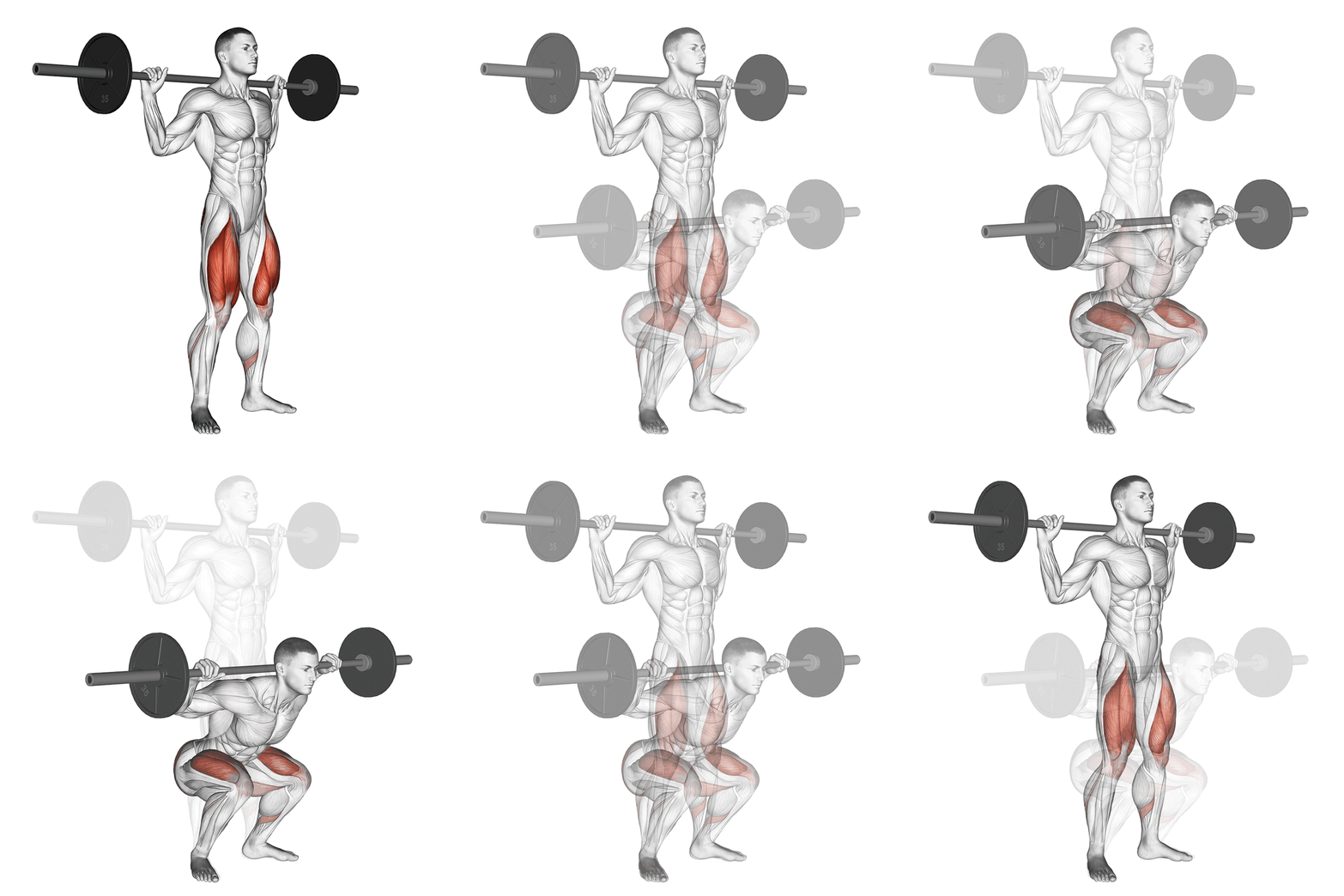
How to do the barbell back squat
- Step 1: Stand with your feet shoulder-width apart, toes slightly turned out.
- Step 2: Hold the barbell across your upper back, resting it on your traps or rear delts.
- Step 3: Engage your core and keep your chest up as you begin to lower your body down.
- Step 4: Bend at the knees and hips, pushing your hips back and down as if sitting into a chair.
- Step 5: Lower yourself until your thighs are parallel to the ground or slightly below.
- Step 6: Keep your knees in line with your toes and your weight in your heels.
- Step 7: Drive through your heels to stand back up, extending your hips and knees.
- Step 8: Repeat for the desired number of repetitions.
Form cues
- Set the bar on your upper traps (high bar) or across the rear delts (low bar), squeeze it into your back and walk it out in two or three steps.
- Feet about shoulder width, toes turned out 15 to 30 degrees so your knees can track over them.
- Take a big breath into your belly and brace before every rep, then sit down between your heels rather than back onto a bench.
- Push your knees out over your toes on the way down and keep the bar over the middle of your foot.
- Drive up by pushing the floor away, letting hips and chest rise at the same speed.
Common barbell back squat mistakes
-
Knees caving inward as you stand up.
Fix: Lighten the load, think "spread the floor" and pause briefly at the bottom to own the position.
-
Hips shooting up first so the lift turns into a good morning.
Fix: Lead with your upper back out of the hole and keep the chest up against the bar.
-
Cutting depth as the weight climbs.
Fix: Pick a depth you can hit every rep (hip crease at or below the knee for most people) and only add weight when you hit it.
-
Heels lifting off the floor.
Fix: Widen your stance slightly, turn the toes out more or use small heel plates or lifting shoes.
Sets, reps and programming
Squat first in a leg session while you are fresh. For strength, work in sets of 3 to 6 reps with 3 to 5 minutes of rest; for muscle growth, sets of 6 to 12 with 2 to 3 minutes. Add 2.5 to 5 kg when you complete every set at the top of your rep range with one or two reps in reserve. Deeper squats grow the glutes and adductors more than half squats, so earn depth before load.
| Goal | Sets | Reps | Rest | Effort |
|---|---|---|---|---|
| Strength | 3–5 | 3–6 | 3–5 min | 1–3 reps in reserve |
| Muscle growth | 3–4 | 6–12 | 2–3 min | 1–2 reps in reserve |
| Muscular endurance | 2–3 | 12–20 | 1–2 min | 1–3 reps in reserve |
Ranges follow the ACSM position stand on progression in resistance training. Muscle grows across a wide range of loads when sets end close to failure (Schoenfeld et al., 2017), longer rests between heavy sets support strength and size (Schoenfeld et al., 2016), and stopping a rep or two short of failure works about as well as training to failure (Grgic et al., 2022). Estimate your working weights with the strength calculators.
Variations and progressions
- Goblet squat — Easier: a front-loaded dumbbell teaches an upright torso and depth.
- Front squat — More quad emphasis and a more upright torso.
- Barbell hack squat — Bar behind the legs; very quad-dominant.
Barbell Back Squat alternatives
- Leg press — Machine option that removes the balance and back-loading demands.
- Split squat — Bodyweight or dumbbells; trains each leg on its own.
- Smith machine front squat — Guided bar path if you train alone.
More exercises that train the glutes as their main target:
-
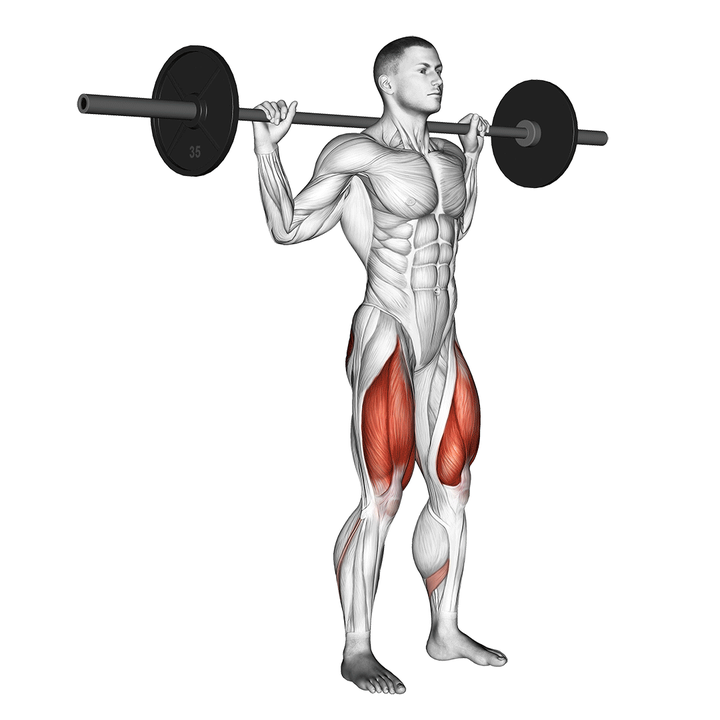
Angled Barbell Narrow Stance Squat
Glutes · Barbell · Intermediate compound -
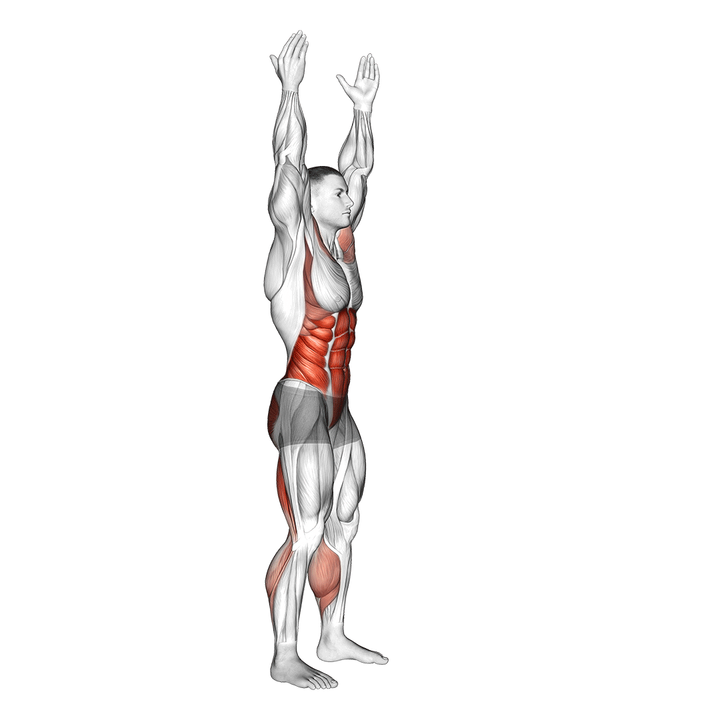
Arms Apart Circular Toe Touch (Male)
Glutes · Body Weight · Intermediate balance -
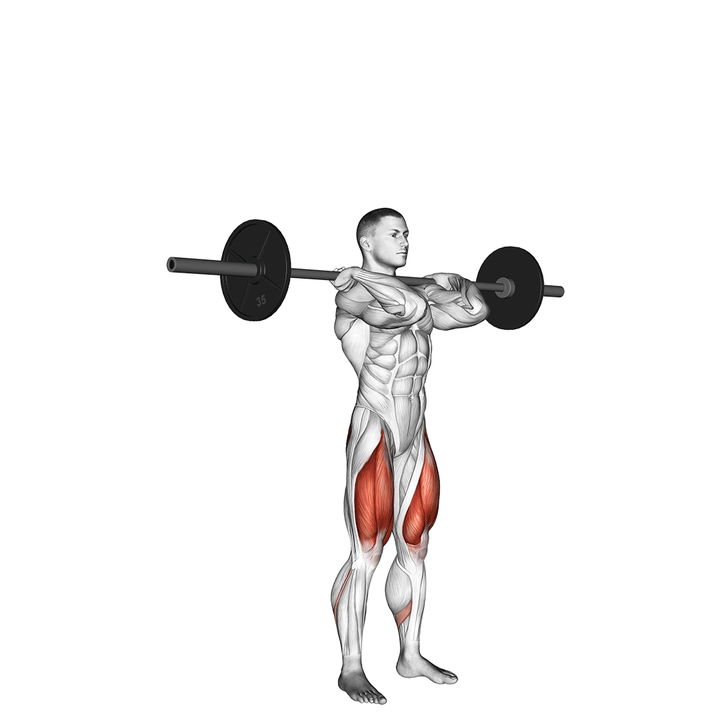
Barbell Clean-Grip Front Squat
Glutes · Barbell · Intermediate compound -
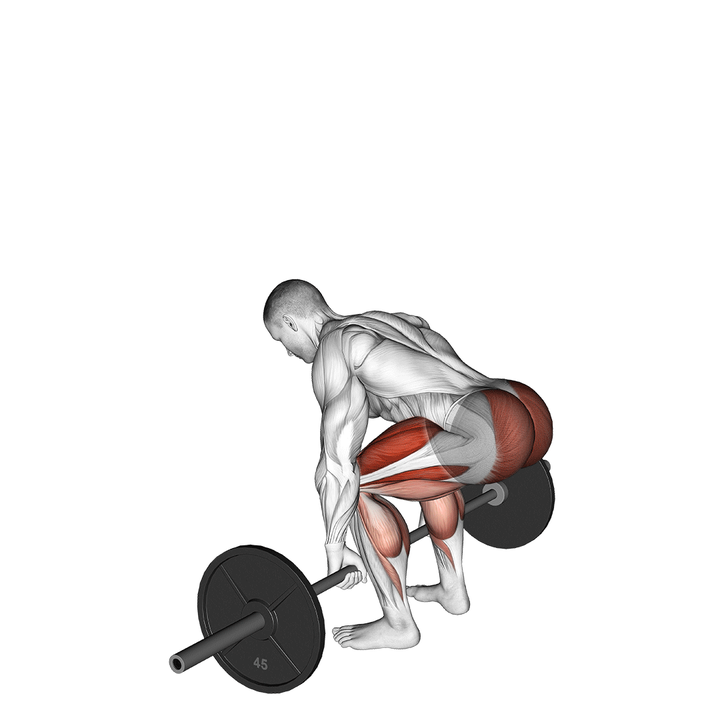
Barbell Deadlift
Glutes · Barbell · Intermediate compound -
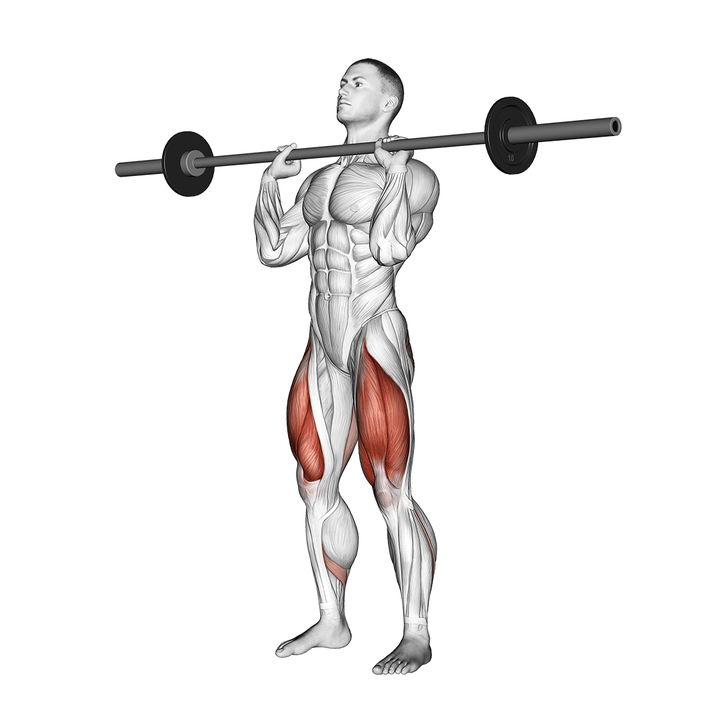
Barbell Front Chest Squat
Glutes · Barbell · Intermediate compound -
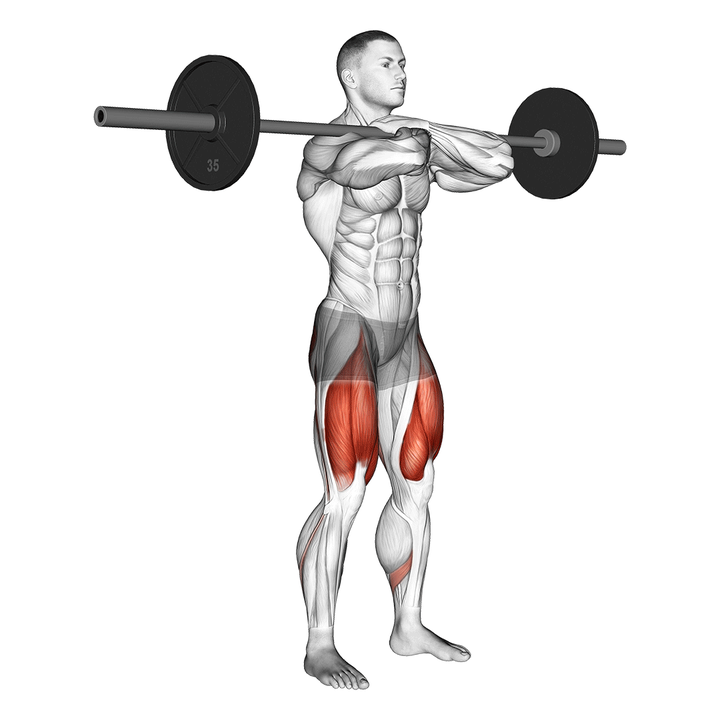
Barbell Front Squat
Glutes · Barbell · Intermediate compound -
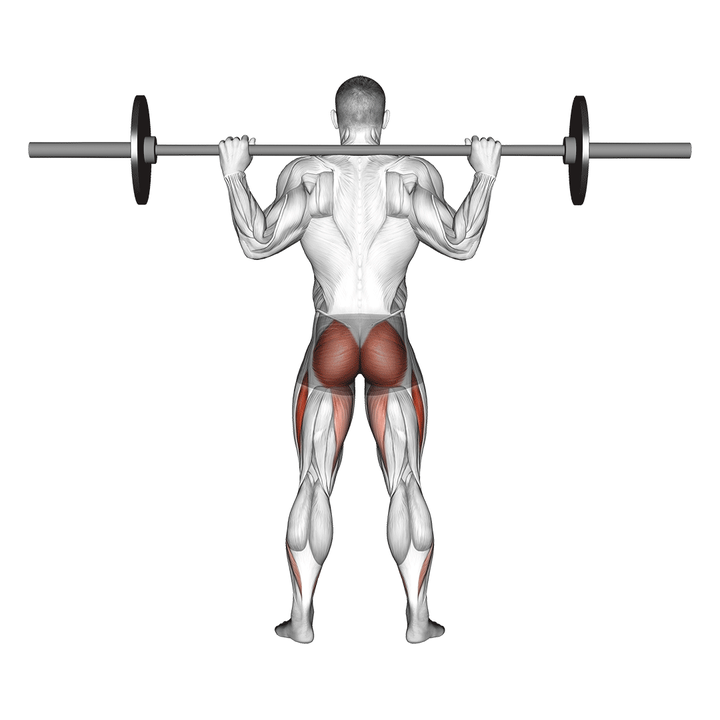
Barbell Full Squat (Back Pov)
Glutes · Barbell · Intermediate compound -
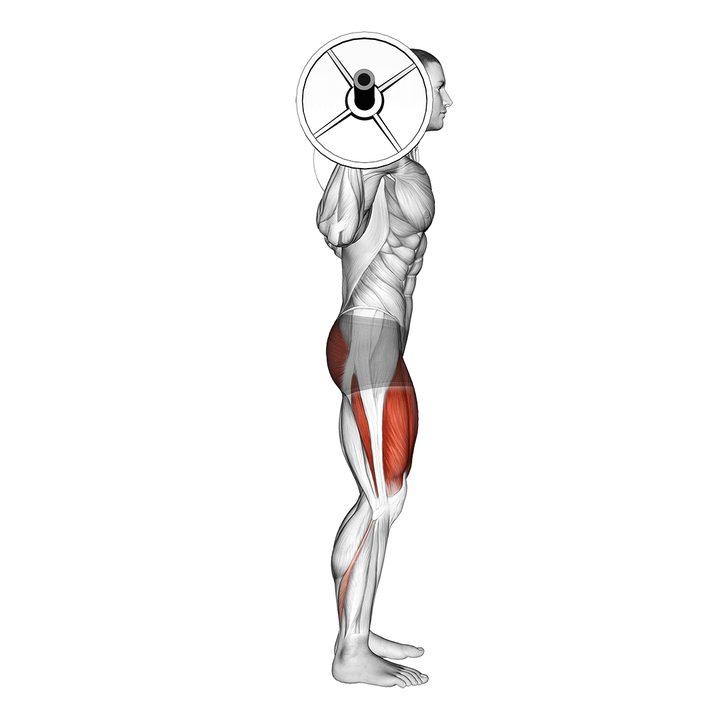
Barbell Full Squat (Side Pov)
Glutes · Barbell · Intermediate compound
Barbell Back Squat FAQs
What muscles do barbell squats work?
Mainly the quadriceps, glutes and adductors, with the hamstrings, calves and spinal erectors working to stabilise. Squatting to full depth trains the glutes and adductors noticeably more than stopping at parallel or above.
Is it bad for your knees if they go past your toes?
No. Knees travelling forward past the toes is a normal part of a deep squat for most people. Problems come from load you cannot control and knees caving inward, not from forward knee travel.
How deep should I squat?
As deep as you can while keeping your heels down, your back neutral and your knees tracking over your toes. For most lifters that is the hip crease at or below the top of the knee.
More glutes exercises
-
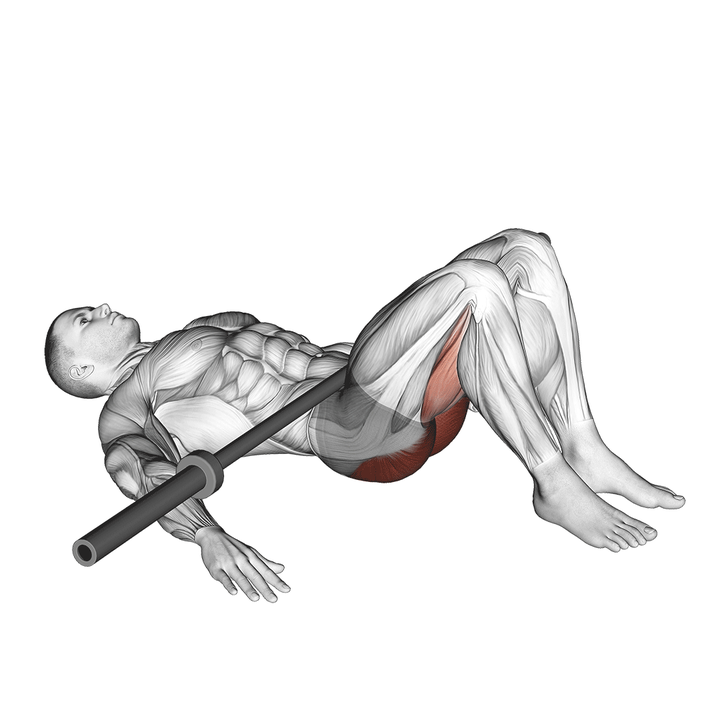
Barbell Glute Bridge
Glutes · Barbell · Intermediate compound -
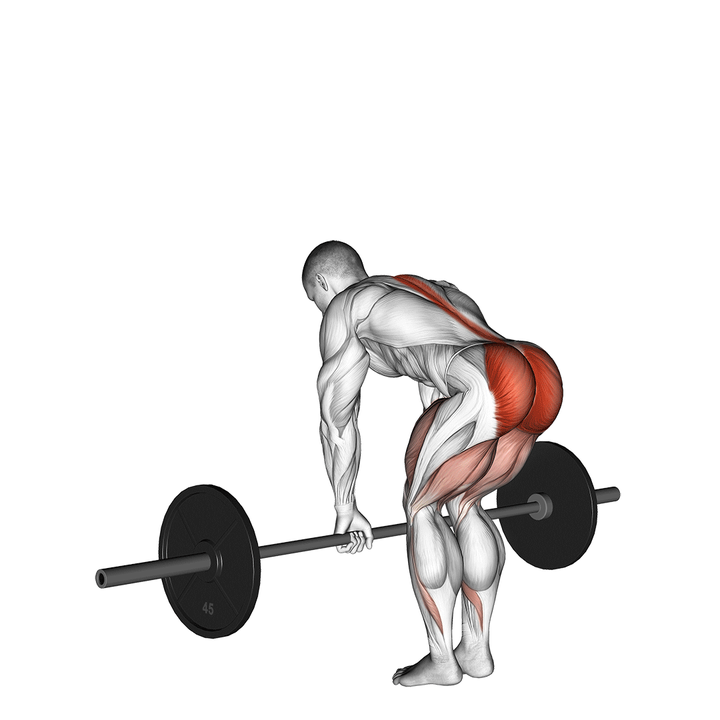
Barbell Romanian Deadlift
Glutes · Barbell · Intermediate compound -
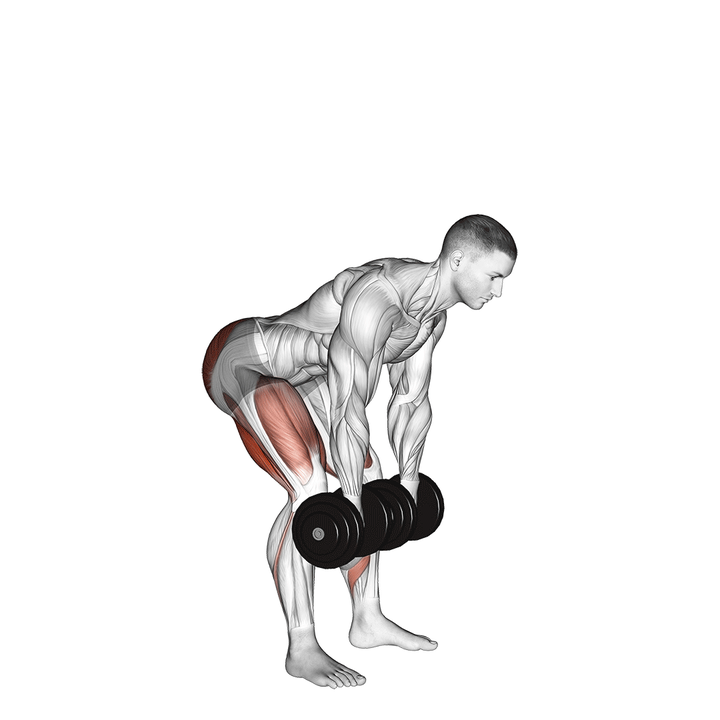
Dumbbell Romanian Deadlift
Glutes · Dumbbell · Intermediate compound -
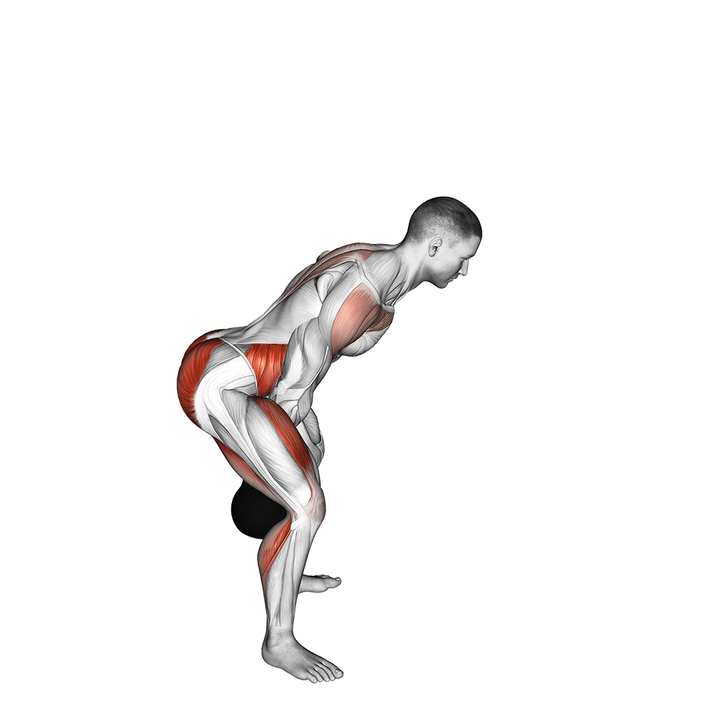
Kettlebell Swing
Glutes · Kettlebell · Intermediate compound -
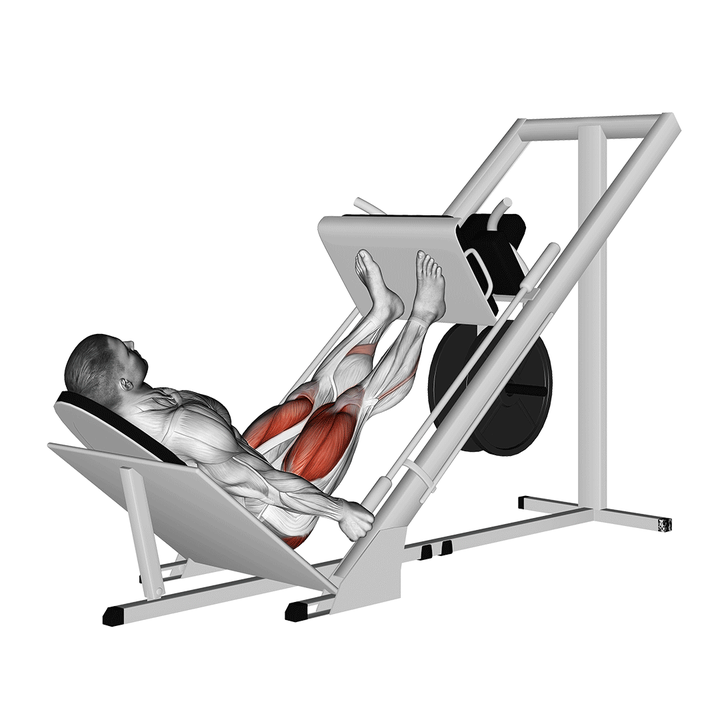
45-Degree Leg Press
Glutes · Sled Machine · Beginner compound -
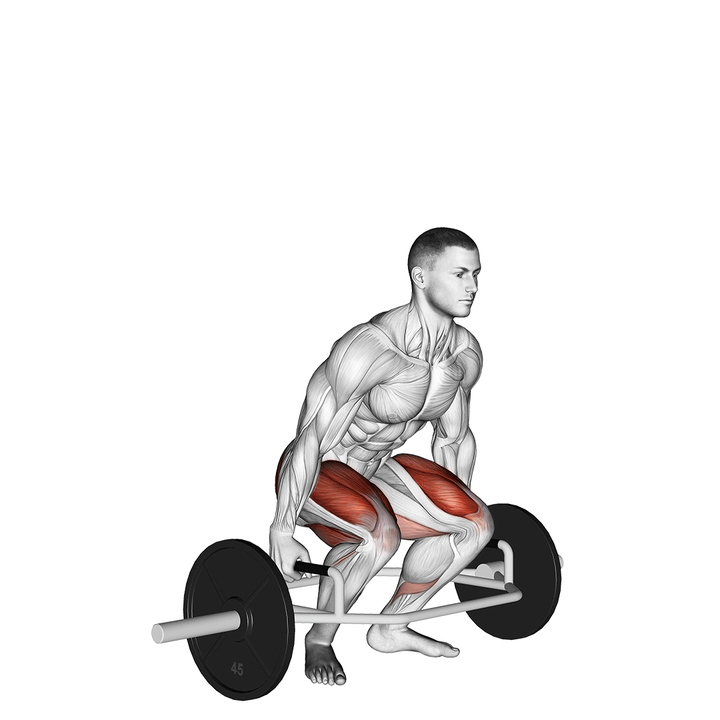
Trap Bar Deadlift
Glutes · Trap Bar · Intermediate compound
Sources
- American College of Sports Medicine. Progression models in resistance training for healthy adults. Med Sci Sports Exerc. 2009;41(3):687-708.
- Schoenfeld BJ, Grgic J, Ogborn D, Krieger JW. Strength and hypertrophy adaptations between low- vs. high-load resistance training. J Strength Cond Res. 2017;31(12):3508-3523.
- Schoenfeld BJ, Pope ZK, Benik FM, et al. Longer interset rest periods enhance muscle strength and hypertrophy in resistance-trained men. J Strength Cond Res. 2016;30(7):1805-1812.
- Grgic J, Schoenfeld BJ, Orazem J, Sabol F. Effects of resistance training performed to repetition failure or non-failure on muscular strength and hypertrophy: a systematic review and meta-analysis. J Sport Health Sci. 2022;11(2):202-211.
Step-by-step instructions and demonstration media are from the ExerciseDB exercise dataset; cues, mistakes, programming and FAQs are written by FitStack.
This guide is general fitness information, not medical advice. Stop if an exercise causes pain and speak to a doctor or physiotherapist about injuries or health conditions before starting a new programme.