Exercise guide · Intermediate · Compound
Standing Barbell Calf Raise: How to Do It & Muscles Worked
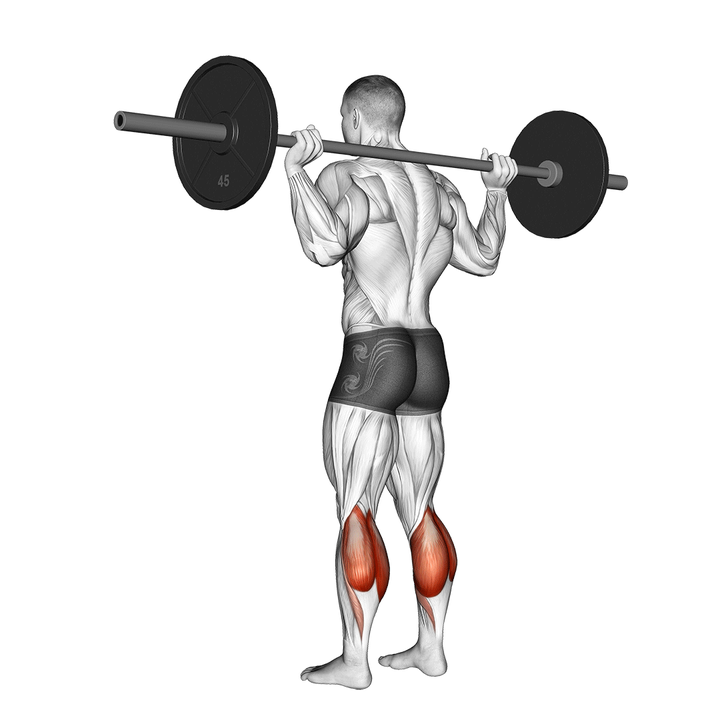
The standing calf raise lifts your heels with a barbell on your back, training the gastrocnemius and soleus through ankle plantar flexion. Standing with straight knees biases the larger gastrocnemius.
- Primary muscles
- Calves
- Secondary muscles
- Glutes , Hamstrings
- Equipment
- Barbell
- Level · type
- Intermediate · Compound
Written by the FitStack training team. Last reviewed .
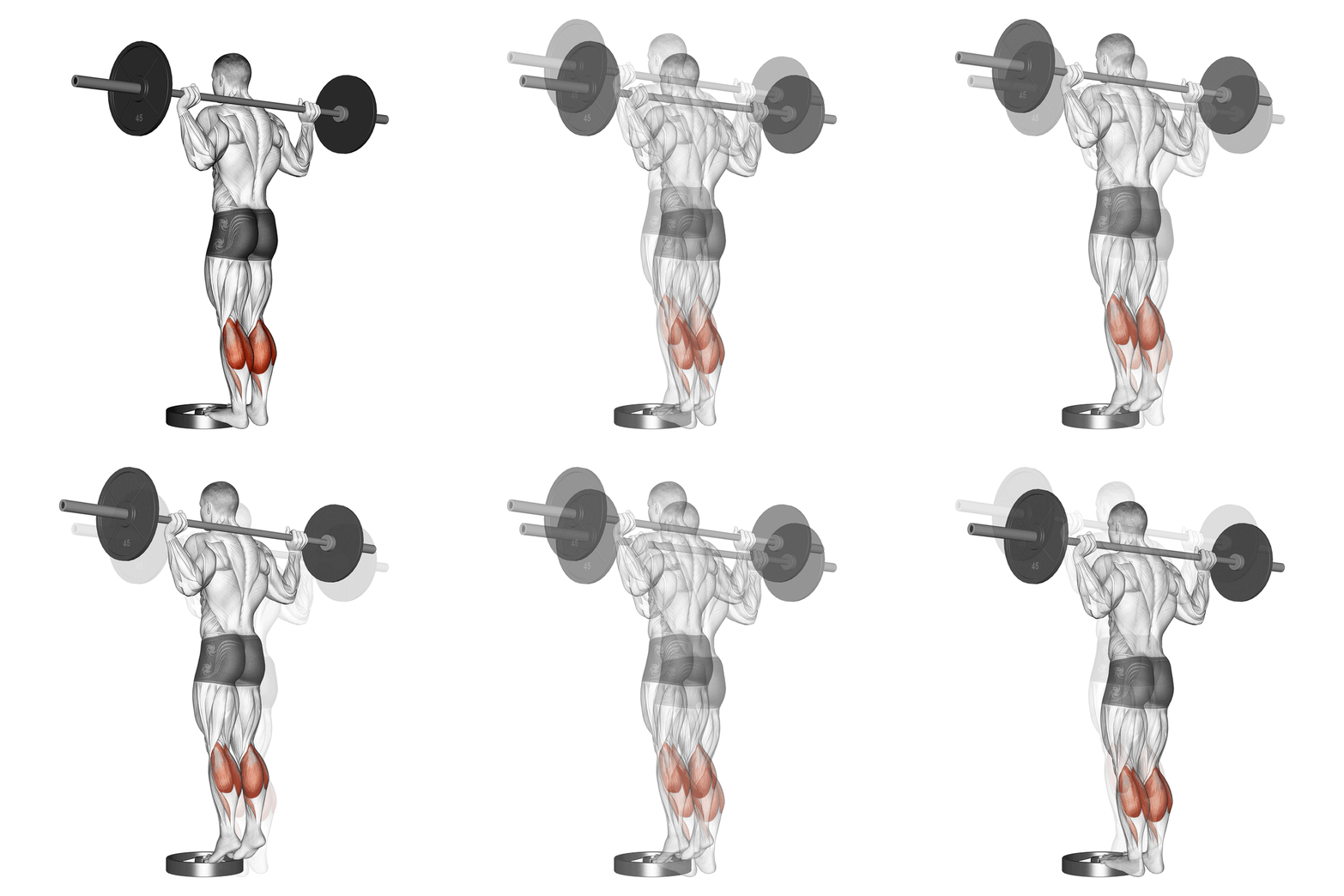
How to do the standing barbell calf raise
- Step 1: Stand with your feet shoulder-width apart and place a barbell across your upper back.
- Step 2: Raise your heels off the ground as high as possible, using only your toes.
- Step 3: Pause for a moment at the top, then slowly lower your heels back down to the starting position.
- Step 4: Repeat for the desired number of repetitions.
Form cues
- Stand with the balls of your feet on a plate or block and the bar on your upper back.
- Lower your heels slowly into a deep stretch and pause for a second.
- Rise as high as you can onto your big toes and hold the top briefly.
Common standing barbell calf raise mistakes
-
Bouncing at the bottom.
Fix: Pause in the stretch for one to two seconds; the Achilles tendon otherwise does much of the work.
-
Short, partial reps.
Fix: Use the full range from a deep stretch to a full rise.
Sets, reps and programming
Calves recover quickly; train them two or three times a week for 3 or 4 sets of 8 to 20 reps. Add a bent-knee (seated) raise to train the soleus.
| Goal | Sets | Reps | Rest | Effort |
|---|---|---|---|---|
| Strength | 3–5 | 3–6 | 3–5 min | 1–3 reps in reserve |
| Muscle growth | 3–4 | 6–12 | 2–3 min | 1–2 reps in reserve |
| Muscular endurance | 2–3 | 12–20 | 1–2 min | 1–3 reps in reserve |
Ranges follow the ACSM position stand on progression in resistance training. Muscle grows across a wide range of loads when sets end close to failure (Schoenfeld et al., 2017), longer rests between heavy sets support strength and size (Schoenfeld et al., 2016), and stopping a rep or two short of failure works about as well as training to failure (Grgic et al., 2022). Estimate your working weights with the strength calculators.
Variations and progressions
- Bodyweight calf raise — Easier, or for home.
- Single-leg calf raise — Harder without extra weight.
Standing Barbell Calf Raise alternatives
- Standing calf raise machine — Easier to load heavy.
- Seated calf raise — Bent knee; targets the soleus.
More exercises that train the calves as their main target:
-
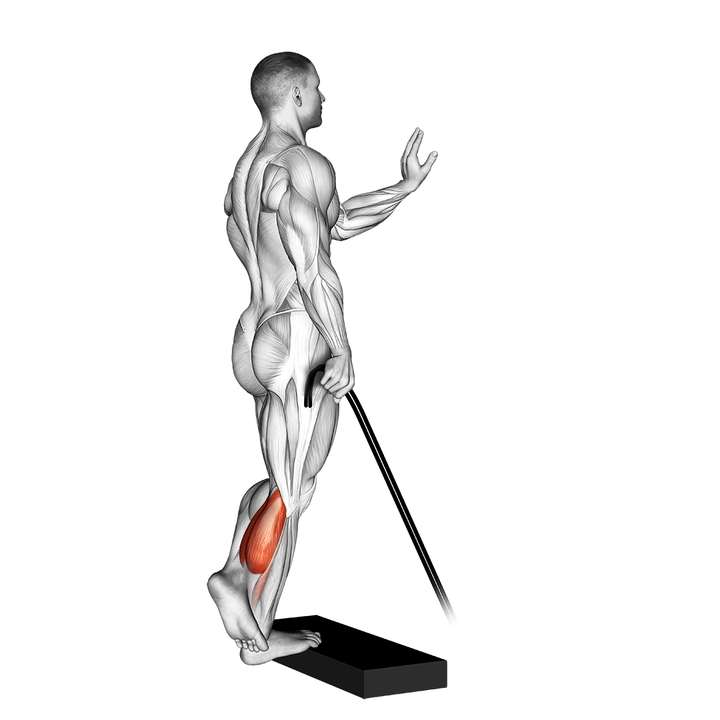
Band Single Leg Calf Raise
Calves · Band · Intermediate compound -
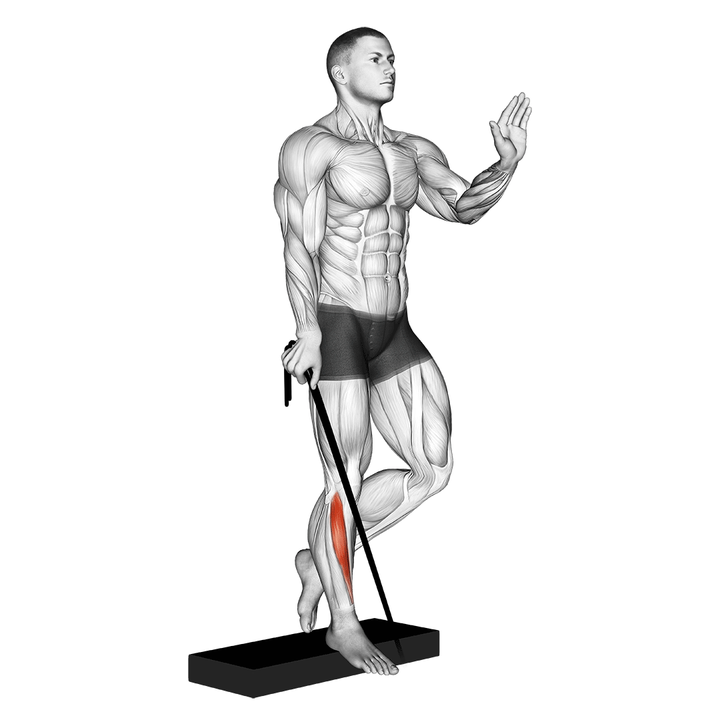
Band Single Leg Reverse Calf Raise
Calves · Band · Intermediate compound -
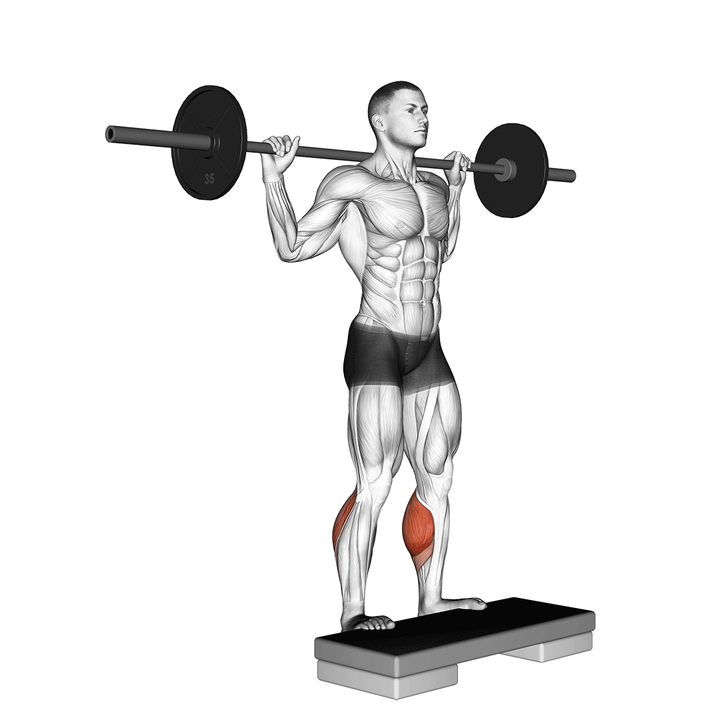
Barbell Standing Leg Calf Raise
Calves · Barbell · Intermediate compound -
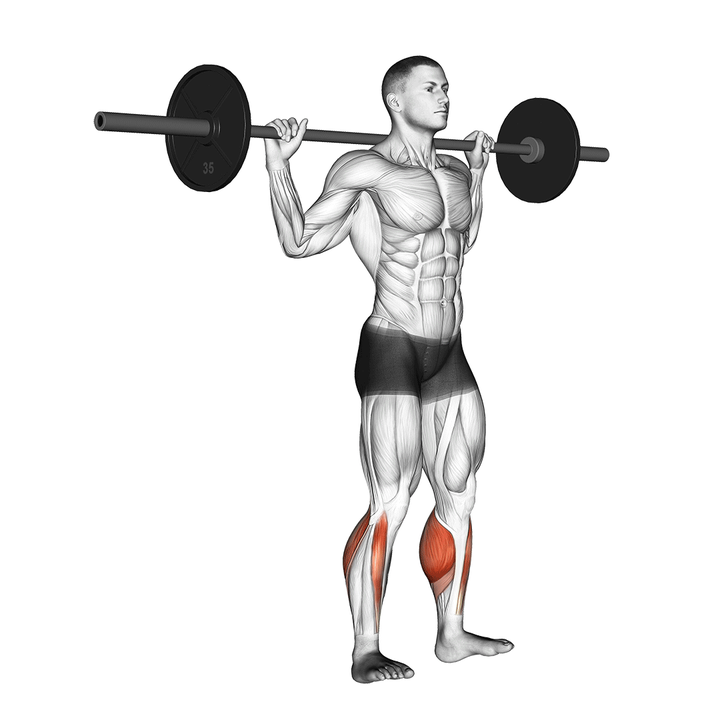
Barbell Standing Rocking Leg Calf Raise
Calves · Barbell · Intermediate compound -
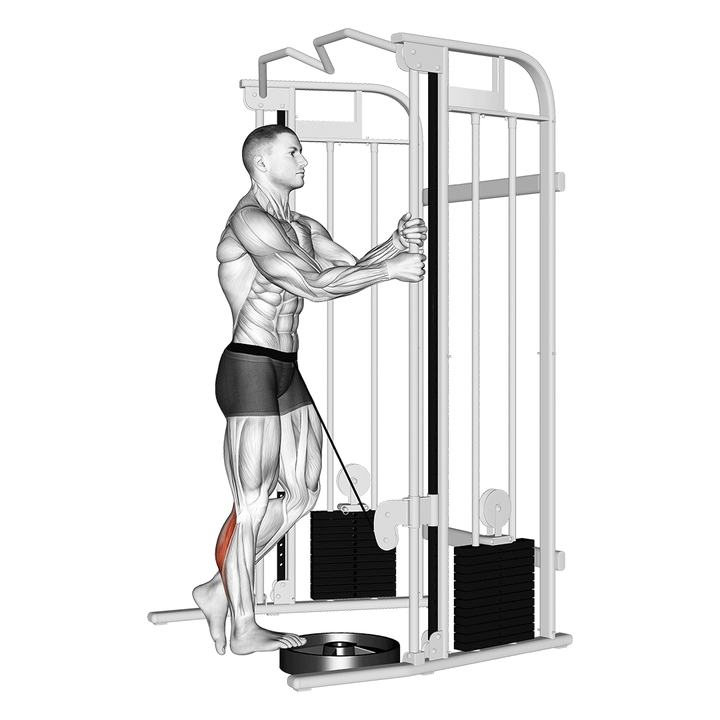
Cable Standing One Leg Calf Raise
Calves · Cable · Intermediate compound -
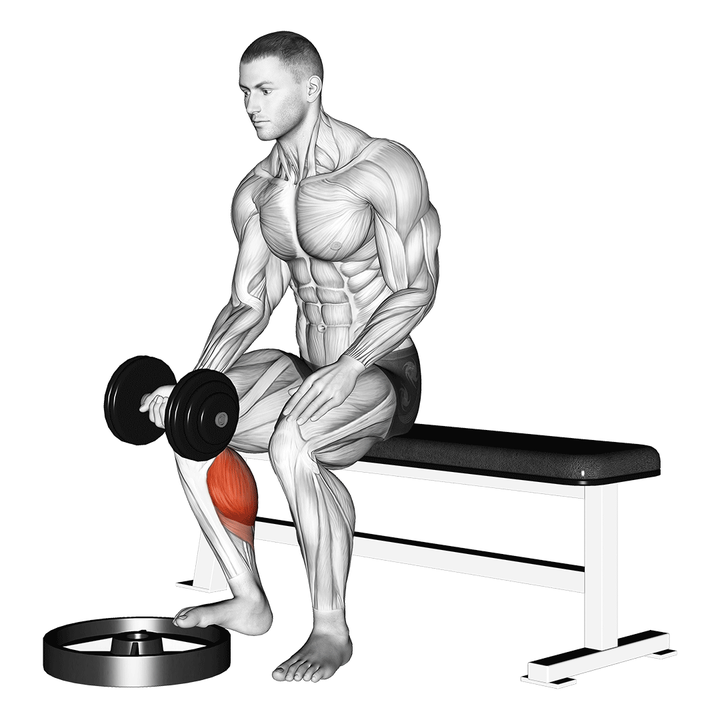
Dumbbell Seated One Leg Calf Raise - Palm Up
Calves · Dumbbell · Intermediate compound -
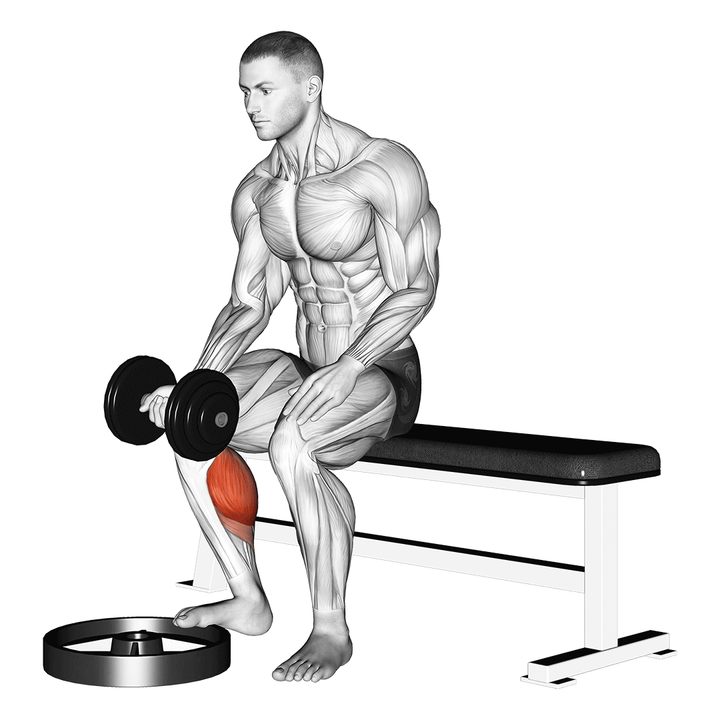
Dumbbell Seated One Leg Calf Raise - Palm Up - Bench Variation
Calves · Dumbbell · Intermediate compound -
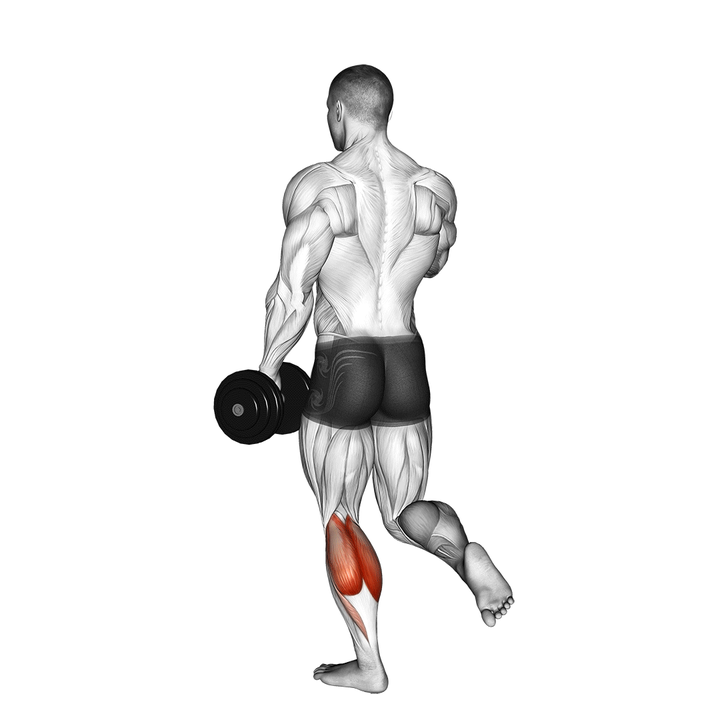
Dumbbell Single Leg Calf Raise
Calves · Dumbbell · Intermediate compound
Standing Barbell Calf Raise FAQs
Why won’t my calves grow?
The most common reasons are bouncing through short reps and too little weekly volume. Use a full range with a pause in the stretch and build up to around 10 or more hard sets a week.
More calves exercises
-
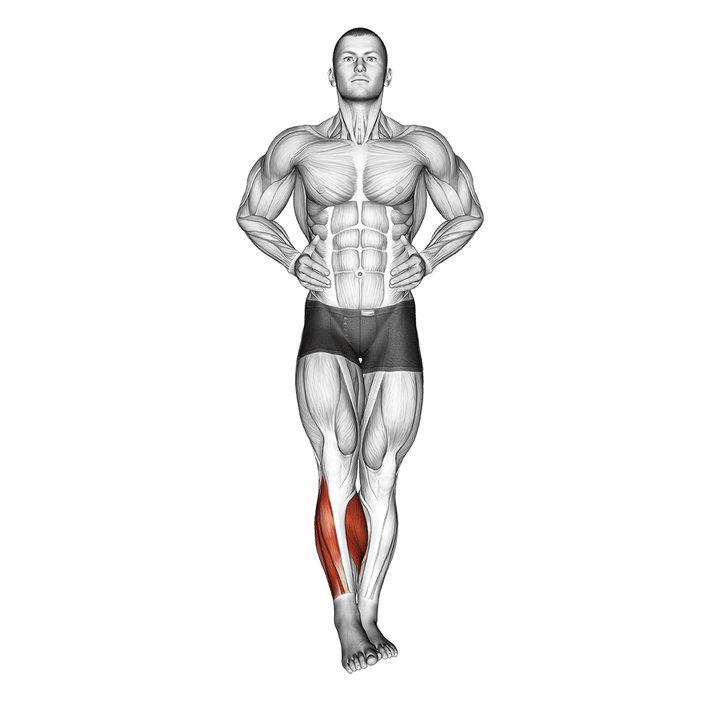
Ankle Circles
Calves · Body Weight · Beginner compound -
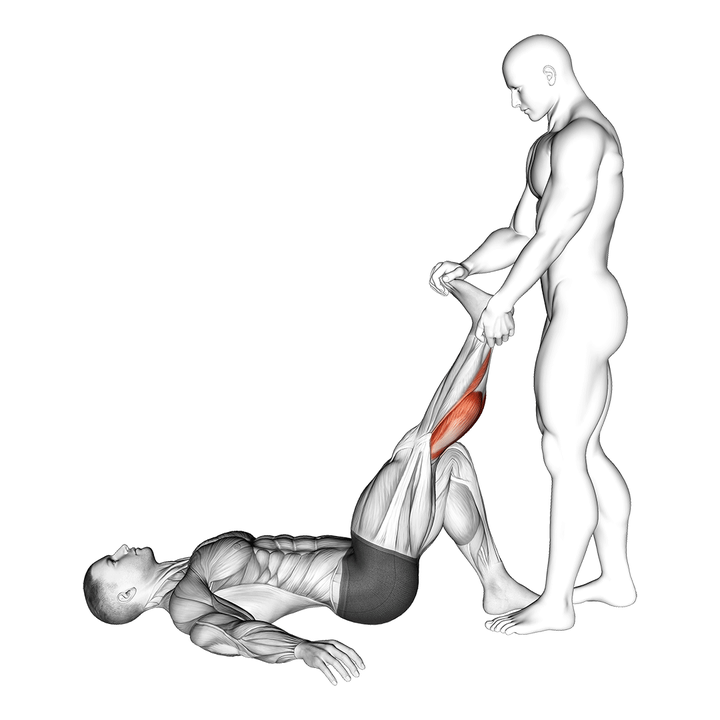
Assisted Lying Calves Stretch
Calves · Assisted · Beginner stretch -
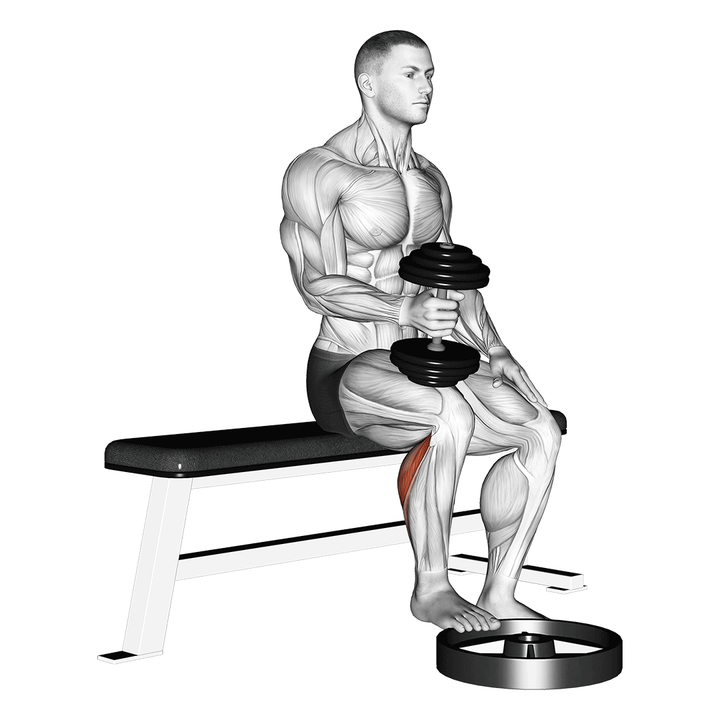
Balance Dumbbell Seated One Leg Calf Raise - Hammer Grip
Calves · Dumbbell · Beginner compound -
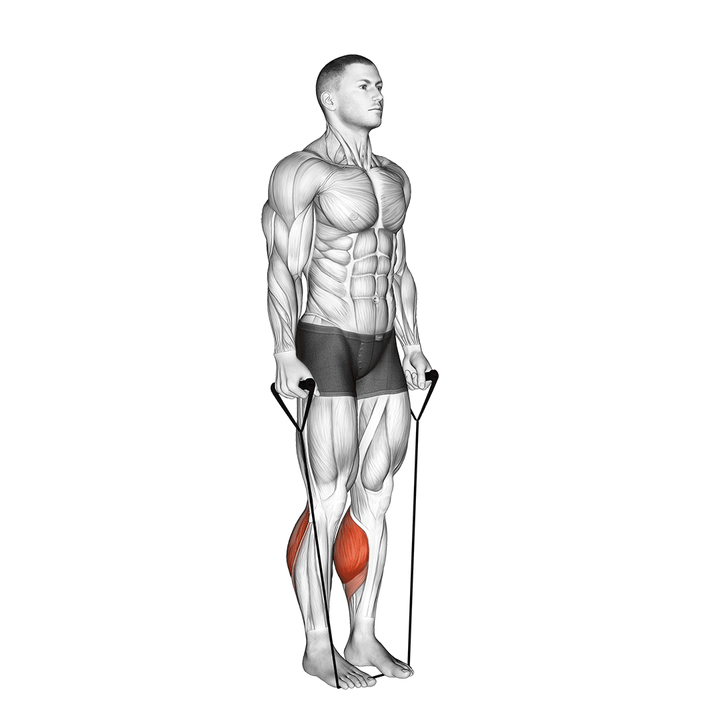
Band Two Legs Calf Raise - (Band Under Both Legs)
Calves · Band · Beginner compound -
Barbell Floor Calf Raise
Calves · Barbell · Beginner compound -
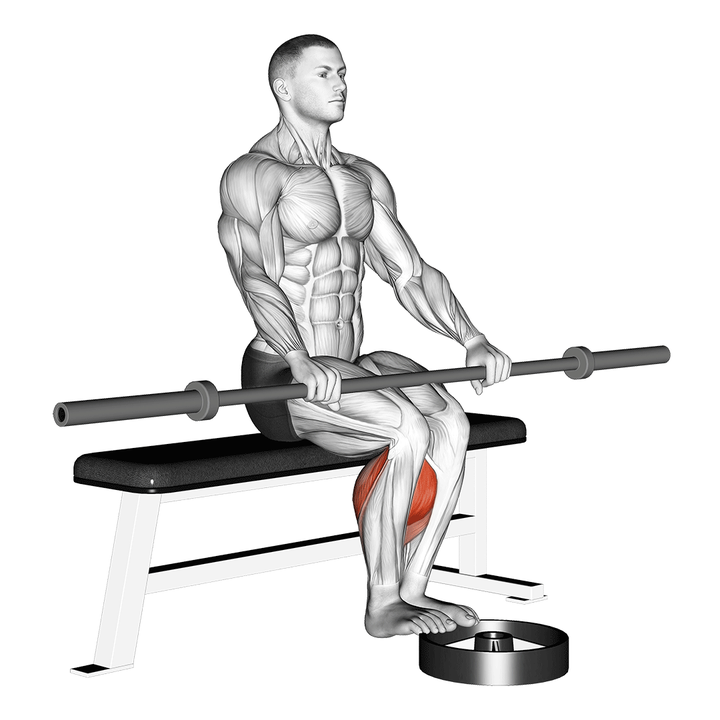
Barbell Seated Calf Raise
Calves · Barbell · Beginner compound
Sources
- American College of Sports Medicine. Progression models in resistance training for healthy adults. Med Sci Sports Exerc. 2009;41(3):687-708.
- Schoenfeld BJ, Grgic J, Ogborn D, Krieger JW. Strength and hypertrophy adaptations between low- vs. high-load resistance training. J Strength Cond Res. 2017;31(12):3508-3523.
- Schoenfeld BJ, Pope ZK, Benik FM, et al. Longer interset rest periods enhance muscle strength and hypertrophy in resistance-trained men. J Strength Cond Res. 2016;30(7):1805-1812.
- Grgic J, Schoenfeld BJ, Orazem J, Sabol F. Effects of resistance training performed to repetition failure or non-failure on muscular strength and hypertrophy: a systematic review and meta-analysis. J Sport Health Sci. 2022;11(2):202-211.
Step-by-step instructions and demonstration media are from the ExerciseDB exercise dataset; cues, mistakes, programming and FAQs are written by FitStack.
This guide is general fitness information, not medical advice. Stop if an exercise causes pain and speak to a doctor or physiotherapist about injuries or health conditions before starting a new programme.