Exercise guide · Beginner · Cardio
Stationary Bike Walk: How to Do It & Muscles Worked
The stationary bike walk is a cardiovascular exercise performed on a leverage machine (stationary bike). It primarily targets the cardiovascular system and also engages the quadriceps, hamstrings, and calves. The exercise involves pedaling at a steady pace, with the option to adjust resistance for increased intensity.
- Primary muscles
- Not recorded
- Secondary muscles
- Quads , Hamstrings , Calves
- Equipment
- Leverage Machine
- Level · type
- Beginner · Cardio
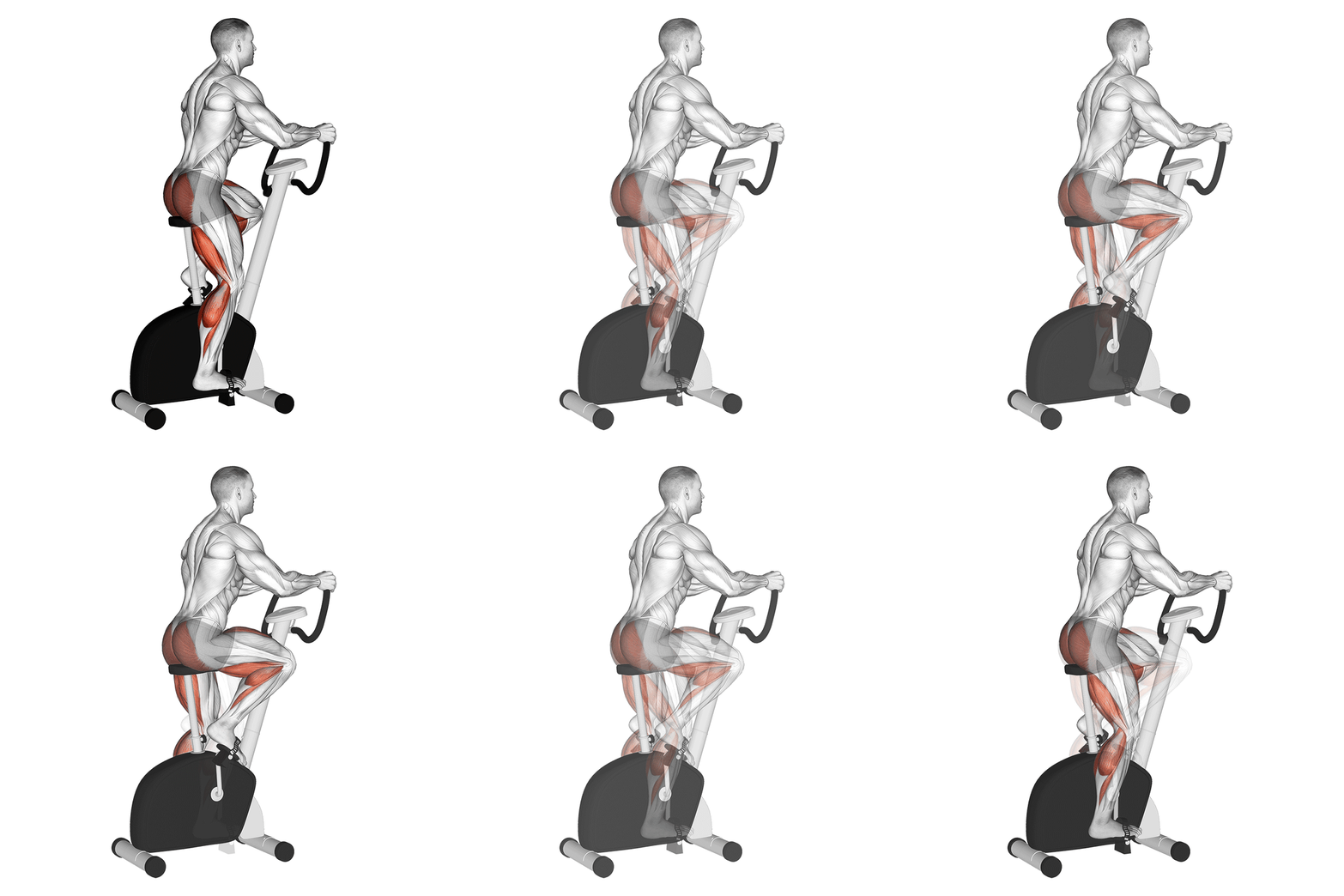
How to do the stationary bike walk
- Step 1: Adjust the seat height and position on the stationary bike to ensure proper alignment.
- Step 2: Place your feet on the pedals and secure them with the straps if available.
- Step 3: Start pedaling at a comfortable pace, keeping your back straight and core engaged.
- Step 4: Maintain a steady rhythm and increase the resistance level if desired.
- Step 5: Continue pedaling for the desired duration of your cardio workout.
- Step 6: Cool down by gradually reducing your pace and resistance level.
- Step 7: Stretch your leg muscles after the workout to prevent tightness and promote recovery.
Step-by-step instructions and demonstration media are from the ExerciseDB exercise dataset.
This guide is general fitness information, not medical advice. Stop if an exercise causes pain and speak to a doctor or physiotherapist about injuries or health conditions before starting a new programme.